Egg-Citing Crash Helmet Design
Conducting their problem-solving in an applied context showed students that computing a final velocity or a “delta t” is not the end of a problem, but the beginning of a solution – the solution to protecting heads from crash injuries.

Seniors giving their culminating Egg Crash Helmet presentation.
As part of a schoolwide evolution towards authentic, project based learning, teaching teams at our school — the Adelson Educational Campus — are reimagining traditionally-taught content in the context of engaging and rigorous projects to be executed over several weeks. The Crash Helmet Design project, in which students create a device for protecting an “egg head” from a fall or crash injury, represents one such project. Here’s our step-by-step guide to transforming the timeless egg drop challenge to a STEM PBL engaging both the scientific method and the design thinking process, delivered via mixed (face-to-face and asynchronous) instruction:
Reimagine the Traditional Egg-Drop Challenge
Using an interdisciplinary approach, the project was conducted jointly by the science department and our Startup Incubator faculty. Content which had previously been delivered face-to-face via lectures, problem sets, and labs during the Mechanics phase of introductory, high school physics was reworked in a thematic, applied unit of study and formatted as a ten-day sequence of investigative and experimental activities. Throughout the redesign and implementation, the teaching team sought a retreat from the classic, teacher-centric instructional model and a migration towards “a collaborative culture for teachers and students,” a key, fundamental best practice of successful project-based learning (PBL) [David, 2008].
Focus on STEM Content
The evolved Crash Helmet Design project applied physics concepts consisting of linear kinematics, Newton’s Laws, impulse, and elastic/inelastic collisions, teaching the basics of each concept “just in time” as applicable to the project. Simultaneously, students employed the Stanford d.school design thinking process – empathizing, defining, ideating, prototyping, and testing – to produce crash helmets for the purpose of protecting users from traumatic brain injury, using an egg to simulate a human head.
Get Student Buy-In
Motivation for selecting the real-world problem of the crash helmet was derived, in part, from the age group of the target student audience: high school juniors and seniors who have recently received their driver’s licenses. Students’ new personal connections to a potential source of injury – car accidents which may result in traumatic brain injury (TBI) – fostered interest and stimulated investment in the first phase of the design thinking process, empathizing with the individuals affected by a specific problem. Each subsequent phase of the design thinking process hinged on the success of students’ initial buy-in, and each posed its own implementation challenges with regard to instruction and evaluation.
“Learning to apply theoretical principles is much better done when given real problems and hands-on activities in projects” [Shekar, 2014].
Employ Relevant Technologies
Throughout the PBL (project based learning) unit, the physics teacher and I coached students in using a variety of technologies at various stages to construct and convey their learning. These included online research and graphical layout tools to create a TBI infographic; Google Sheets to record, analyze, and graph collected data; Quicktime to record a vlog; Coggle to create an ideation document; Tinkercad and Fusion 360 to design crash helmets for 3D printing; and Google Slides to construct final presentations following helmet drop testing.
Apply Best Practices
Best practices for successful project implementation were sought from literature, applied throughout the project, and enhanced by our own local experiences. Specific practices which proved critical to the success of the project included workspace planning, emphasizing reconfigurability of the work areas depending on the current design thinking phase; one-to-world technology access, including uninterrupted use of laptops and 3D printers; sufficient, at-school time-on-task, via block scheduling; formative evaluations, which required (for most tasks) transitioning to rubric-based authentic assessments in lieu of “right-or-wrong” problem sets; and instructional delivery methods, which ultimately took the form of flipped lessons, collaborative work sessions, and checkpoint meetings with instructors.
Add Flexibility via Face-to-Face and Asynchronous Delivery
Flipped lessons consisted of both original videos recorded by our instructional team and existing YouTube content, presented to students via our website. The flexibility afforded by flipped lessons and an effective online learning management system (Edsby) proved uniquely necessary due to a variety of daily schedule inconsistencies including sports event absences and multiple Jewish holidays. Working both synchronously and asynchronously, students successfully executed the Crash Helmet Design project, exhibiting mastery in physics content, the engineering design process, and soft skills including research, collaboration, pivoting, and presentation.
Culminate in a Big Finish

Testing a prototype prior to the big “drop day.”
Like any egg crash project, the culminating “drop day” featured students strapping eggs into their 3D-printed helmets, then dropping them from successively higher altitudes until either the eggs cracked or the helmets failed. Teams measured the success of their designs against the problem statements they had previously written during the design phase, determining whether their helmets met, beat, or did not meet specifications. After cleaning some gooey splats, teams presented their design thinking process and discussed the iterative steps to improving and refining designs, considering what it would take to finalize an egg crash helmet for production and distribution.
The bottom line: The Crash Helmet Design project brought to life for our students something which typically lives only on paper for high school physics students: equations of motion and the impulse formula. Conducting their problem-solving in an applied context showed students that computing a final velocity or a “delta t” is not the end of a problem, but the beginning of a solution – the solution to protecting heads from crash injuries. And that’s a real-world problem worth solving.
References
Shekar, A. (2014). Project-based learning in engineering design education: Sharing best practices. Retrieved from https://www.asee.org/public/conferences/32/papers/10806/download.
David, J. (2008). What Research Says About Project-Based Learning. Retrieved from http://www.ascd.org/publications/educational_leadership/feb08/vol65/num05/Project-Based_Learning.aspx
Photo Credit: Camille McCue
Schools, Showcase Your Teachers
Human capital matters. Showcase your teachers to parents, and potential parents, frequently.
What does it take to sell a progressive, independent high school when AP and SAT scores don’t tell the whole story? And how do nontraditional middle schools – which don’t even have such data points (and can’t tally college admissions) – demonstrate their worth and success?
As schools migrate to “21st century instruction,” in which soft skills and project-based learning are foundational, accessing a school’s merit becomes more challenging to quantify. Parents debating hefty tuitions for their children’s education want to know their investment is sound. They may intuit that preparing their kids to flex and pivot in the messy career world requires more from schools than antiquated drill-and-practice – but their own experiences in traditional institutions may cloud their abilities to judges what matters now.
One of the most actionable ways in which schools can convey their qualitative worth, and ultimately sell the value of their unique educational offerings to families, is to showcase its teachers.
Extraordinary teachers don’t just clock-in for nine months of the year. They train constantly, via self-study, advanced coursework, and fellowships, and they engage in their careers by publishing and presenting at professional conferences as well as mentoring others. Extraordinary teachers adjust and adapt their curriculum and instruction to connect with the actual students in the room, and they make their instruction relevant to recent events in the world around them. One administrator with whom I once worked marveled at an English teacher who, “had every minute of her day-by-day curriculum mapped out from September to May.” But while detailed planning is admirable, an inability and unwillingness to pivot and update, irrespective of subject area, indicates either a lazy teacher or a static content field. (In either case, there’s no need for a human at the helm: a robot is coming for that job.)
Extraordinary teachers also work to build in their students the skills and habits of adult professionals operating in the real world, adjusting to meet the age-appropriate needs of their learners. Herma de Ridder, a science teacher instructing early elementary students at the Alexander Dawson School (Las Vegas), coaches children as young as age five to keep a lab notebook tracking every experiment and observational study they conduct. She helps her students learn and use new vocabulary in context; plan their work by writing logical procedures (lovingly correcting their “kid spelling” in the margins); draw diagrams of lab setups; attach and label photos and collected samples; and draw conclusions from their findings. In short, she trains them to behave as scientific thinkers. Saying that Herma teaches science is insufficient to capture the full story, but seeing is believing: Dawson showcases what that entails by regularly bringing parents into her lab, inviting parents on field trips, and sharing those lab notebooks with them throughout the year.
While years of teaching experience and degrees can contribute greatly to developing quality teachers, non-teaching career experience matters, too. Our high school technology lead, Leon Wilde, is a former pilot, Evernote entrepreneur, and lifelong tinkerer. The authenticity of those skills goes a long way in coaching our students to innovate in the Adelson Startup Incubator. In recent years, I’ve witnessed him guide high schoolers to build and fly UAVs, construct a chair befitting Marilyn Monroe, and design and fabricate a “volcacho” (solving the bare nacho problem with a volcano of spewed toppings). Who Leon is as a person and a professional, not just his curriculum delineated on paper, are vital value adds which shape the learning experience for his students – value adds we actively showcase beyond the Incubator. That showcasing consists of welcoming visitors, meeting with collaborative partners and vendors, representing the school in external events and contests, appearing in virtual tour videos, and working with parents on Dine and Design nights – all events that go beyond the “typical” teaching duty.
Don’t cloister your teachers in their classrooms, trotting them out before parents only on back-to-school night. Don’t sell your curriculum as though it can be divorced from instruction, with “just any teacher” operating interchangeably in your teaching positions. Human capital matters. Showcase your teachers to parents, and potential parents, frequently. In the end, connecting the dots among students, teachers, and parents will help the adults making the financial investment appreciate the value add of the guides mentoring their children… and continue to do so long term.
Modeling Mammoth Extinction
"How did woolly mammoths go extinct?" Examining the delicate balance of life in the most recent ice age, middle schoolers engage in systems modeling, using STELLA software, to understand interacting variables and their impacts on the fate of the mammoths.
Adelson middle schoolers investigate and model mammoth extinction.
Middle schoolers in Paula Garrett's science class at the Adelson Educational Campus are touching woolly mammoth fossils on loan from the lab of paleontologist Steve Rowland at UNLV. How cool is that? And they're asking the question, "How did these enormous animals become extinct?" Examining the delicate balance of life in the most recent ice age, students then engage in systems modeling to understand interacting variables and their impacts on the fate of the mammoths.
Playing a dice game simulation of mammoth fates -- including "mammoth lives another year," "mammoth dies of starvation," "mammoth is killed by a hunter," and "a calf is born" -- students investigate population fluctuations and extinction trends. They then create and customize computer models in the Startup Incubator, using STELLA software, designing their models to include reinforcing (birth) and balancing (death) loops, and examining the resulting decay curves.
Surprisingly, the woolly mammoth was around more recently that we've been taught: Earth's last mammoths died out just 3600 years ago, from Wrangel Island, Siberia, most likely from hunting by humans and from climate change. Through scientific investigation and systems modeling, our middle schoolers use techniques analogous to STEM professionals to understand what happened to those last remaining mammoths, and whether other populations might someday experience similar fates.
Most Likely to Succeed
Education. We all got one. What does it mean now to be educated, how do we structure school, and what makes the next generation, Most Likely to Succeed?
Posts
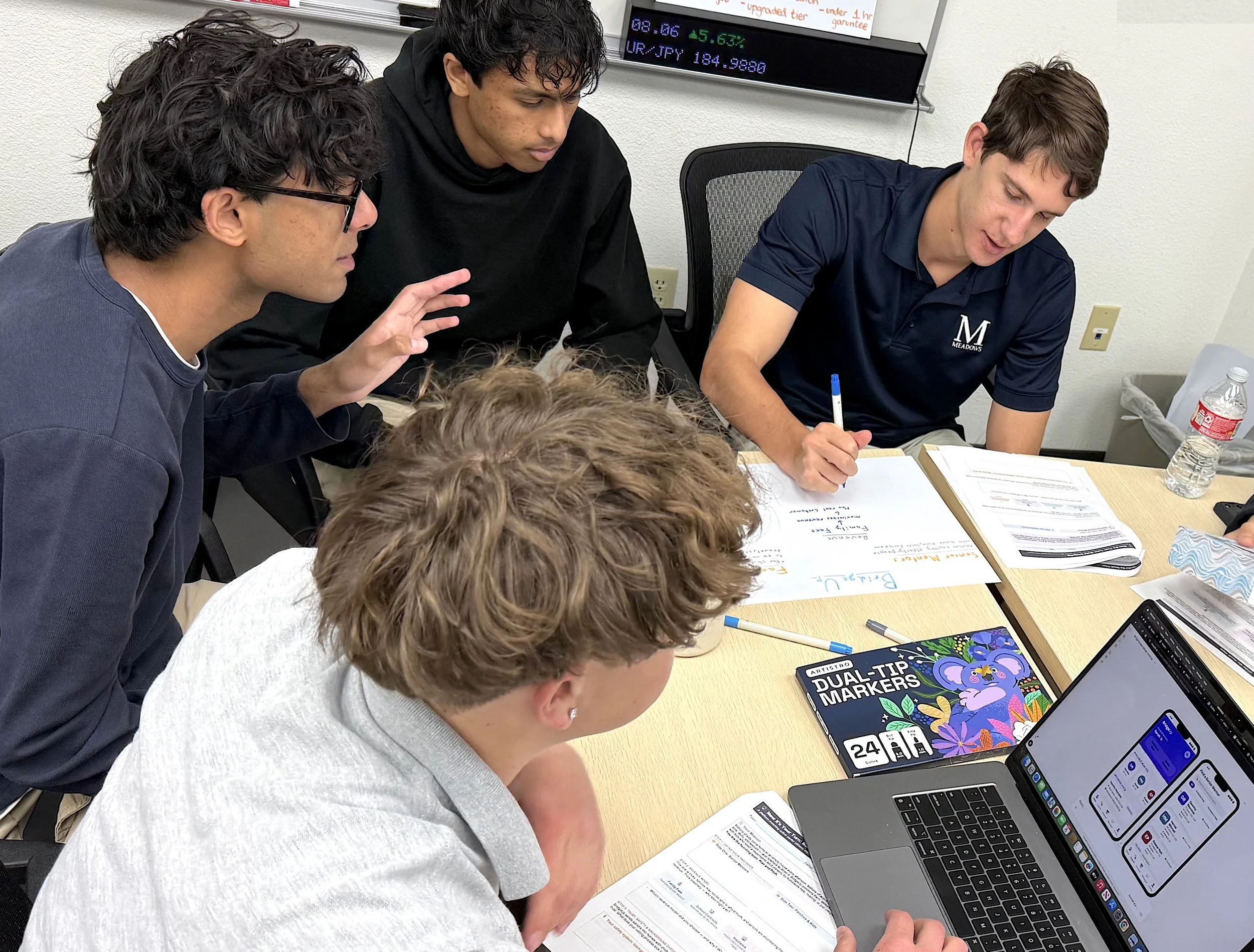
School’s out, but DECA advisors are already planning for next season. Prepare now for the challenge regarding ICDC absences. To colleagues, these feel egregious, as competitors spend only 15 minutes before judges while the rest is seen as “fun.” The frustration is real, but DECA conference engagement is about so much more than just competition. Here are the evergreen skills students are actually building.