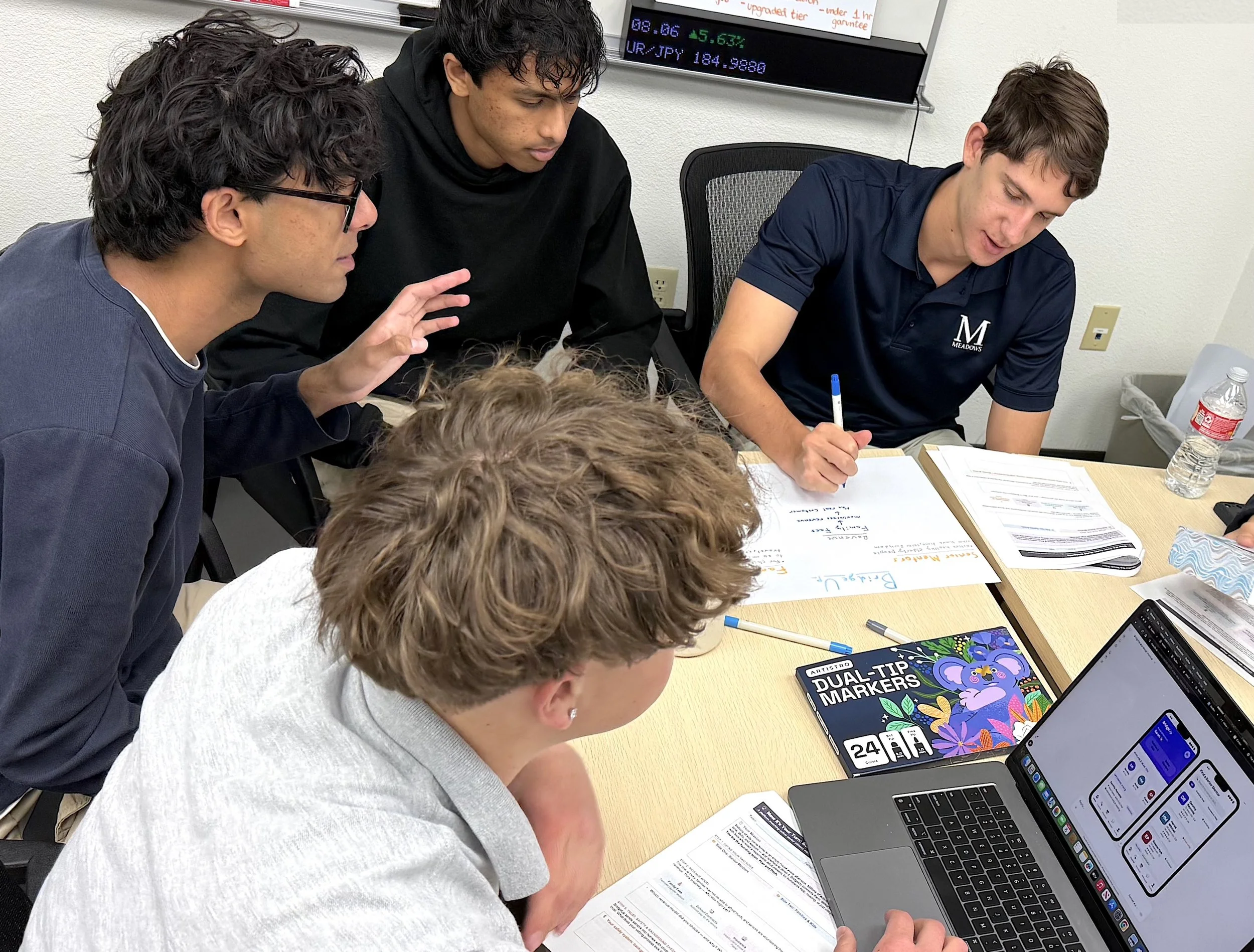
From generating practice DECA exams and evaluating student role plays to creating dynamic RPGs and prototyping model products for innovation plans, we’re leaning into AI — both for today's classroom and tomorrow's careers.
AI Accelerates DECA Prep
If you teach entrepreneurship or advise DECA, AI tools have quickly become your most valuable assistants. This year, my students and I used a variety of AI tools to build personalized content, generate practice sets, and even prototype physical innovations. To be clear: everything below is classroom and coaching practice. When students compete, they follow DECA’s Statement of Assurances – disclosing AI use, verifying content, and ensuring their submissions reflect their own creative work. Here are ten moves you can replicate today:
1. Generate exemplar role play scripts, with visuals
Grab a published role play or TDM case online, upload it with the official rubric, and ask the AI to produce a full exemplar script with timecodes that hits every rubric line. Then ask the AI to suggest paper-slide visuals scene by scene. Students draw their versions, turning a flat script into a judge-friendly performance. Group students to practice!
2. Give instant AI feedback
Students can record their presentations into any AI that accepts audio, which transcribes and scores them against the rubric for on-demand practice and instant feedback. To create practice scenarios, upload a sample event with its PIs and ask the AI to generate a brand-new role play with its own area of emphasis, PIs, rubric, and exemplar. (We asked Gemini for a regionally relevant ethics case, and it produced one on OSHA violations at the Boring Company’s Las Vegas tunneling project.)
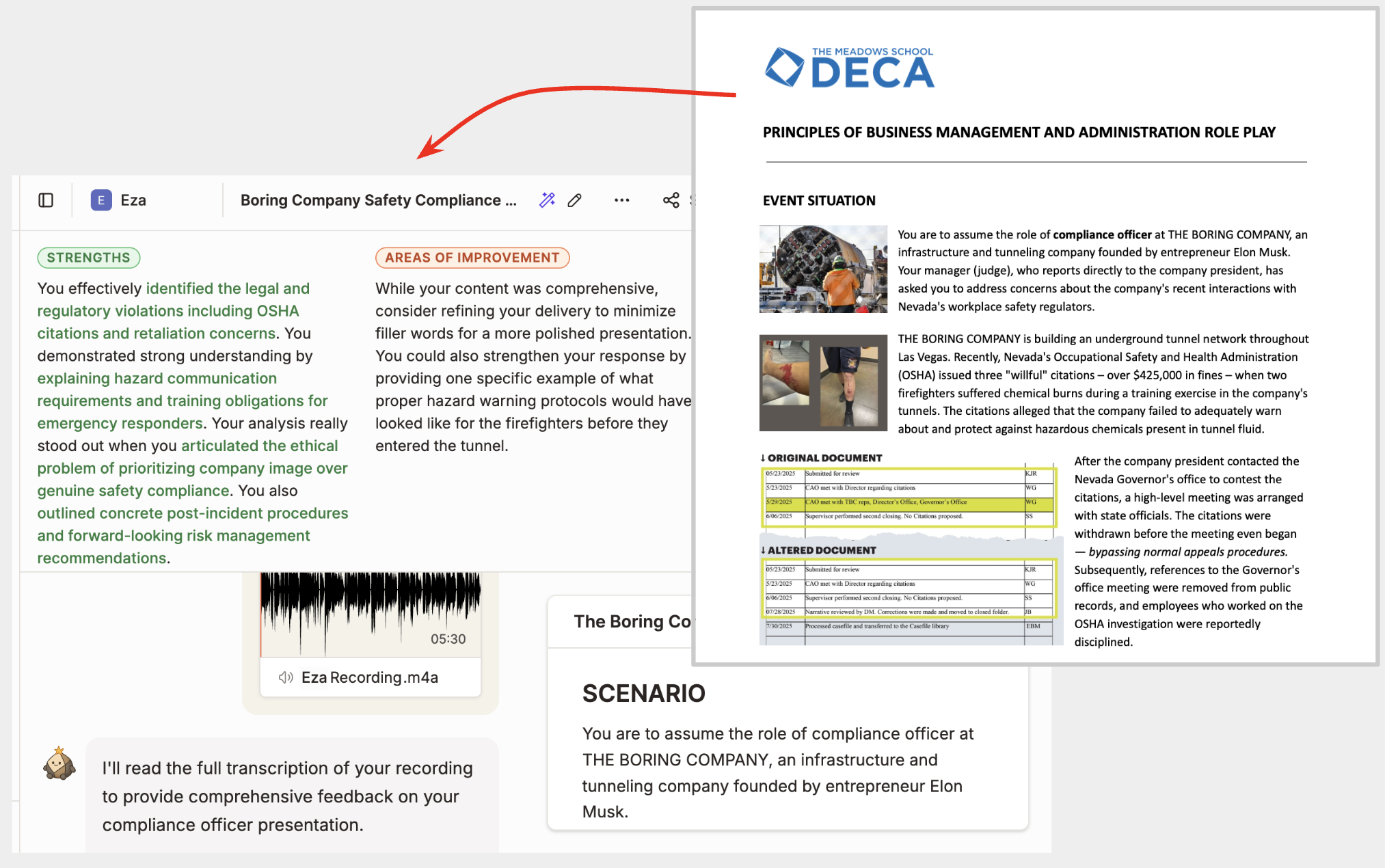
Gemini-generated role play with Flint feedback to a student’s recorded response
3. Create targeted practice exams
Upload DECA practice tests and event PIs and have AI generate fresh exams. When students stumble on a cluster like channel management or financial ratios, ask for targeted drills.
4. Gamify app-based exam drills
I turned those DECA practice exams into class review games using Kahoot!’s AI question-extraction tool (which also adds relevant images). Students used Quizgecko and RemNote to build their own practice apps for on-the-go drills.
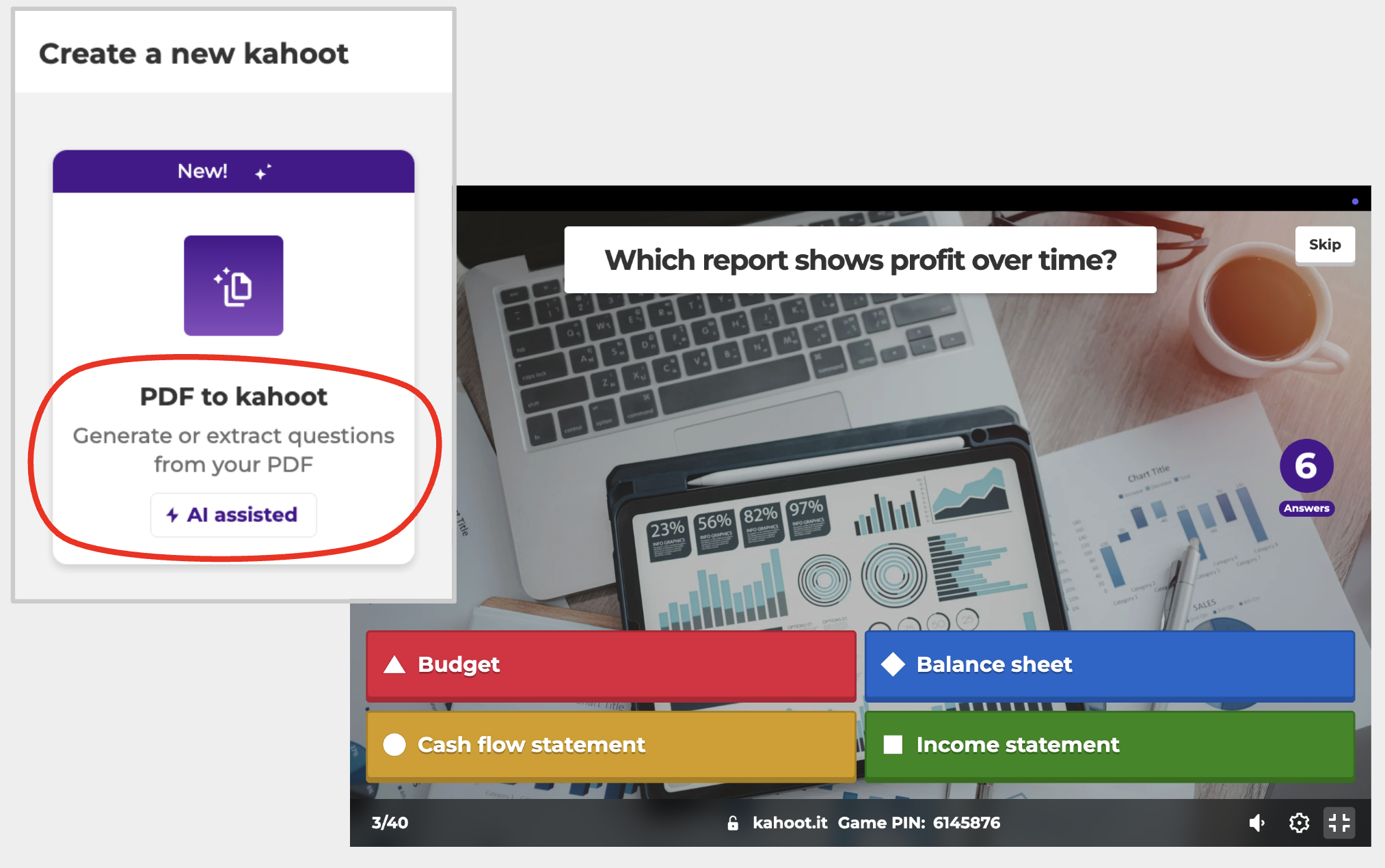
Kahoot! transforms PDFs of AI-produced question into dynamic review games
5. Assess reading dynamically
As part of our broader digital business exploration, students read books including The Thinking Machine (NVIDIA) and Careless People (Facebook/Meta). I used Flint to engage each student in an adaptive written exchange – open-ended prompts that responded to their answers, pushed back where reasoning was thin, and offered constructive feedback in real time. Far richer than one-size-fits-all reading comprehension checks.
6. Customize lessons on any theme
Our marketplace unit covered Airbnb, Rover, TaskRabbit, and the challenge of disintermediation in such companies. I had Claude generate ten real marketplaces paired with fictional twins. Teams pitched their new companies (such as FixItFast) – defining the marketplace, explaining operations, planning scale, and demo-ing the app prototype (Claude also generated a step-by-step prompt guide for students to build their prototype in Claude itself).
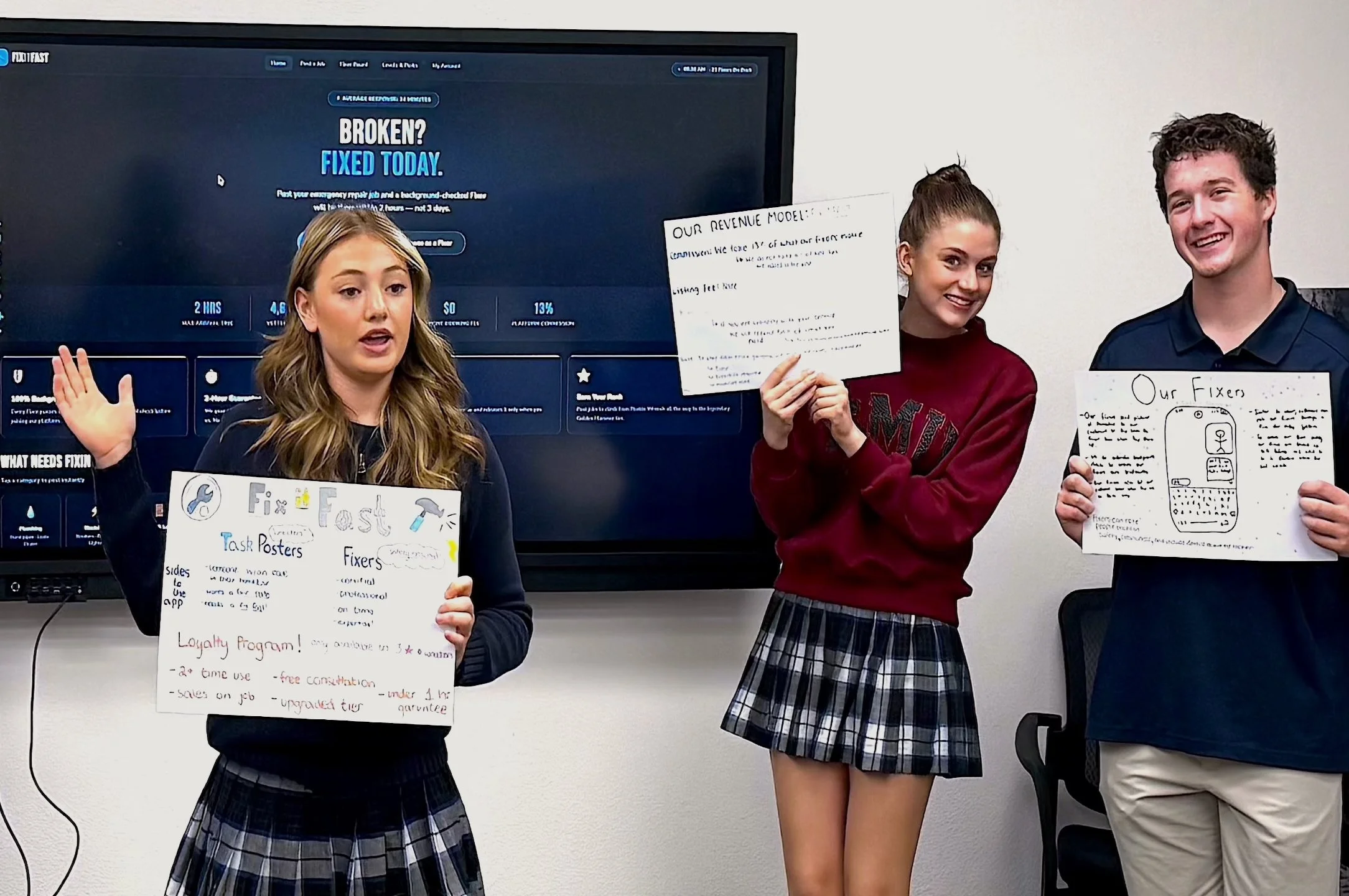
Pitching a new marketplace — including vibe-coded web apps
7. Produce financial deep dives for real companies
AI tools can pull real data and build scenarios across tons of companies. We explored defunct, ethically-challenged ones like Enron, Theranos, and Nikola so students could track current and debt-to-equity ratios, plus stock prices over time for publicly traded entities. Multi-company comparisons that used to require extensive research now take a single prompt.
8. Simulate crisis situation rooms
I took real Uber crises – the “#deleteUber” movement and others – and asked Gemini to build out team roles (CIO, Legal, HR) and scenarios for students to address as a board presentation, along with an example script. I then used HeyGen to turn that script into an exemplar video showing each role in action, modeling for students how the roles played together before running their own.
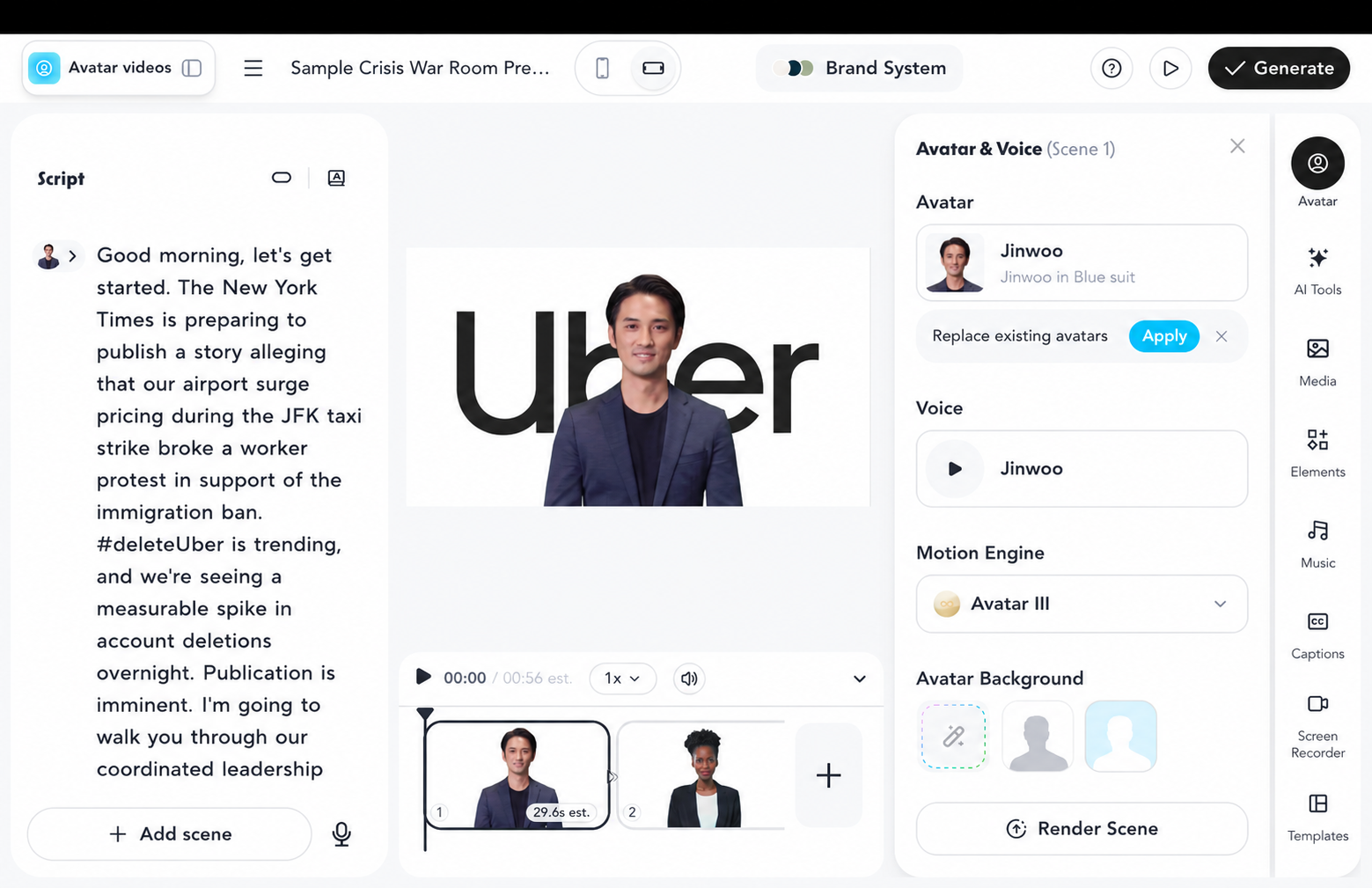
HeyGen transformation of a scripted role play to a video exemplar
9. Create and play custom decision-making RPGs
Claude helped me build dynamic online role-playing games in which student pairs took turns playing roles within a company, working to maximize indicators like profit while minimizing ones like employee attrition. Our Uber Greyball game, shared to students via Netlify, put students in seats making real decisions, winning or losing based on coordinated or competitive strategies.
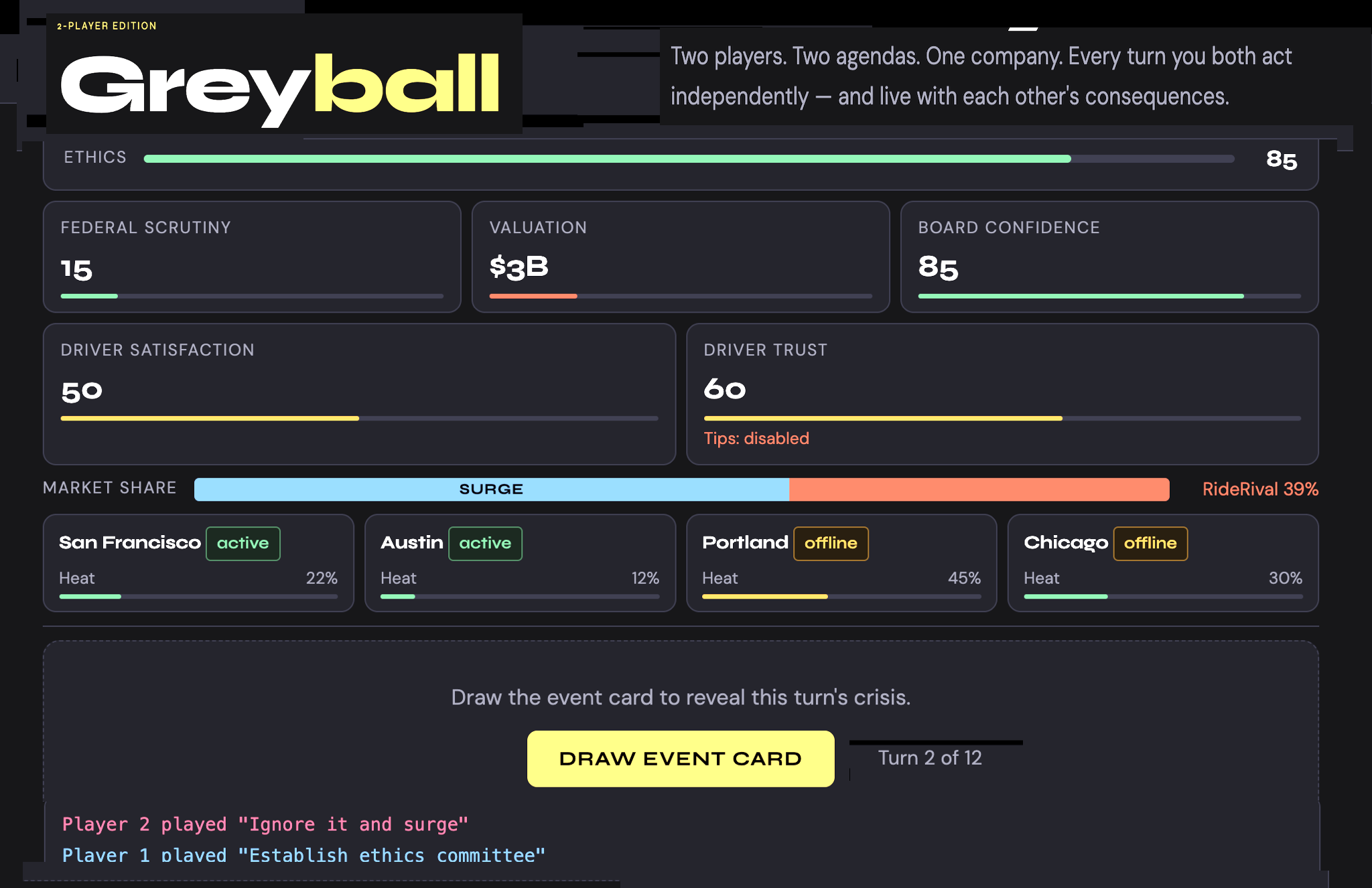
Claude can create dynamic RPGs, placing students in authentic, business decision-making roles
10. Build visuals and prototypes
Because Innovation pitches involve products that don’t yet exist, students used Nano Banana and other image generators to visualize concepts. One team prompted ChatGPT to generate an STL file for their Innovation Plan, sliced it, 3D-printed it, and painted it – idea to prototype in an afternoon.
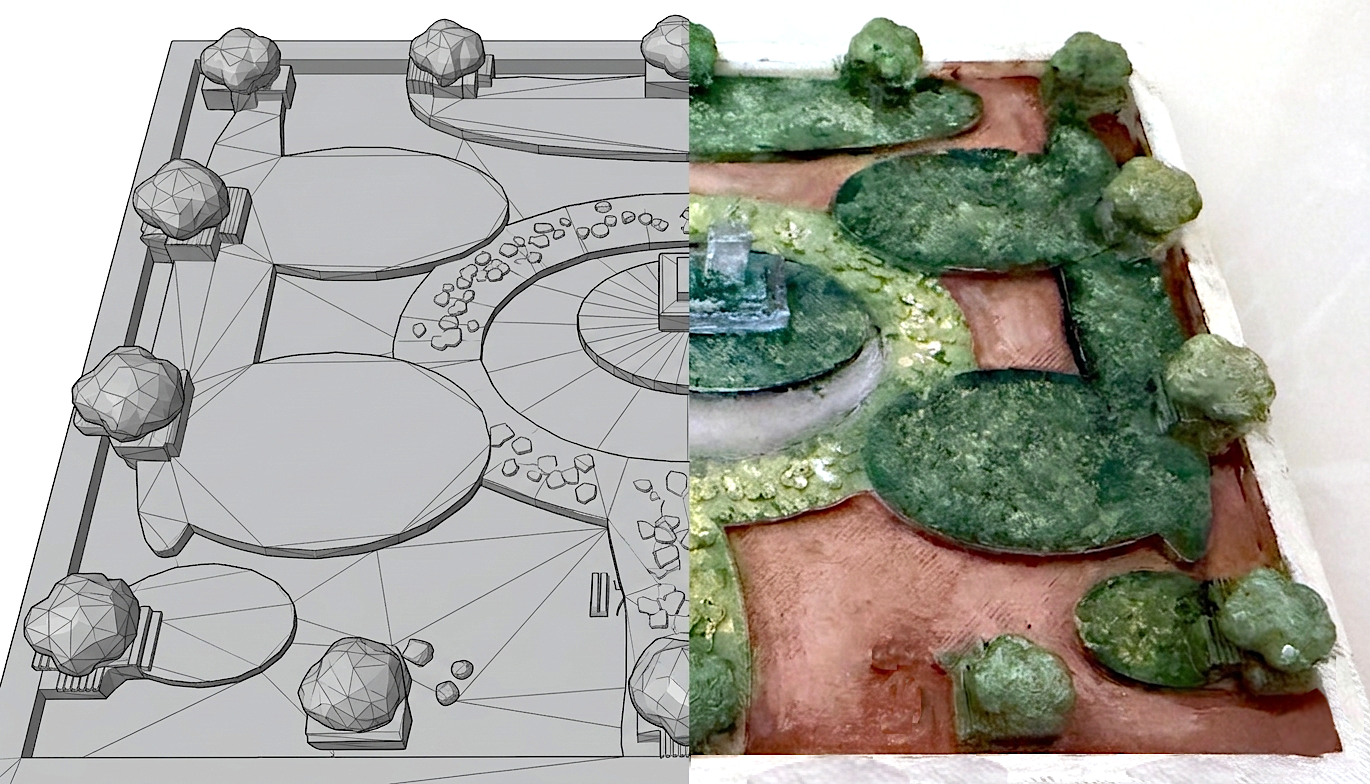
ChatGPT-prototyped 3D design for an Innovation Plan (Anya and Emily)
The throughline: AI personalizes our teaching, practice, and prototyping in ways we’ve never had time for before!