Teamwork and Trophies: The Evergreen Value of Student Competitions
Teaching our youth that they will experience both wins and losses – and how to take the next step following either outcome – is one of the most important lessons we can impart to them. And mentoring students to work effectively in team configurations is one of the most evergreen, and difficult, lessons we can share in steering the outcomes of competition toward wins.

In guiding students to become both constructive collaborators and resilient competitors, we help them build powerful skills to thrive in the next phase of their academic and professional careers – and become leaders on the world stage.
Revving up for spring semester means that annual student competitions are getting underway. Chaperones are eagerly volunteering for overnight trips (are they?!?) and teams are excitedly (or frantically) pushing toward their head-to-head showdowns. After years of helming Future Cities and now supporting my faculty coaches in their own lead-ups to competition, I know that these next few weeks are grueling nail-biters (and honestly, more memorable than the daily grind of classes in cold, dark, January). But why compete?
Competition, aka The Pencils, Pixels, and Panic of Student Showdowns
Why put in the endless hours before and after school and on weekends with your army of DECA-preneurs, debaters, and Cyberpatriots for the “thrill of victory, or the agony of defeat” (nod to the premillennial sports broadcast, Wide World of Sports)? Teaching our youth that they will experience both wins and losses – and how to take the next step following either outcome – is one of the most important lessons we can impart to them. And mentoring students to work effectively in team configurations is one of the most evergreen, and difficult, lessons we can share in steering the outcomes of competition toward wins.
A well-known parenting coach recently slammed competition as possibly “a bad thing” when viewed as a zero sum game. Sure, there are winners in competition, but that doesn’t mean everyone else is a loser. Competition is fundamental to the work of every American in our capitalist, democratic society; it helps us chase a goal, celebrate those who earn the highest honors (whether that is us, or others), and see with transparency the gold standard we should strive for. Who hasn't been inspired when seeing a buzzer-beater in a championship ball game, hearing a child correctly spell the winning word in a bee, cheering on our favorite American idol, or watching a successful SpaceX launch? Working towards big goals, along with others headed in the same direction, energizes our lives and gives us purpose. It also yields a roadmap for our daily work. Failure is just as important as success as it provides insight about "how not to do things" the next time. There is no inherent “good” or “bad” in competition, just lessons to be learned and carried forward.
Huddle Up! Winning (and Losing) Together
It’s important to note here that students rarely compete alone: more often than not, they usually compete in collaboration with teammates against opposing teams. Some may view this as tribal “us” versus “them” but – whether you’re talking about politics, sports, grant funding to universities, or Mock Trial events – such is the infrastructure of America. Team competition requires the collaboration of multiple individuals who bring unique skills to the group endeavor, striving collectively to attain new levels of achievement. So… yay teamwork, it makes the dream work! But we educators know that it’s not so easy: the implementation of team constructs in K12 classrooms is daunting. I routinely field calls from parents lamenting the woes of collective work – “my kid is the smartest and ends up doing all the work himself, what’s the point of this?” Or as a 2023 EdSurge article so artfully put it, “Why does group work suck so much? And why do teachers and professors continue to assign it?” A former student, Theo Cooper, who’s now an engineering major at MIT shared the answer with our FIRST robotics team on a recent alumni visit: “The easy problems have been solved, so working on anything meaningful means working on something inherently complex – and that will require many smart people putting their smart minds together constructively.”
To successfully cultivate K12 teamwork, there’s investment to be done: teachers require professional development to better guide collaboration so that we can effectively build high-performing student groups and teams. Just assigning roles to students is insufficient – they need guidance in emulating the agile paradigm of multiperson, time-sensitive workflows implemented in the tech world and beyond. One option is for educators to become certified Agile Classroom Teachers (through any of several online providers; the professional development efforts are well worth schools’ time and money). Such an evolution in how schools approach teamwork may not be easy, but if giant corporations including IBM can do it, and did do it under former CEO Ginny Rometty, then schools can, too – and doing so will not only give our kiddos the edge now, but in their professional futures, too.
From School to the World Stage
As we enter 2024, let’s stay focused on the ulterior end game of K12 contests: today’s preparation for school-based collaborating, competing, winning, and losing serves as a trial run for life's real-world experiences (no, it’s not just to hoist the trophy, although that’s pretty cool!). Our job is to coach our students to evaluate objectively, “What does it take to reach the top?” In guiding students to become both constructive collaborators and resilient competitors, we help them build powerful skills to thrive in the next phase of their academic and professional careers – and become leaders on the world stage.
COVID-Era Graduates Learned Big Life Lessons
What a strange year this has been for our graduating students. COVID was certainly their "senior surprise" — but other challenges materialized as well. Their grit in powering through it and asking for social and emotional support when needed yielded realistic strategies they’ll tap when life presents new obstacles and crises.
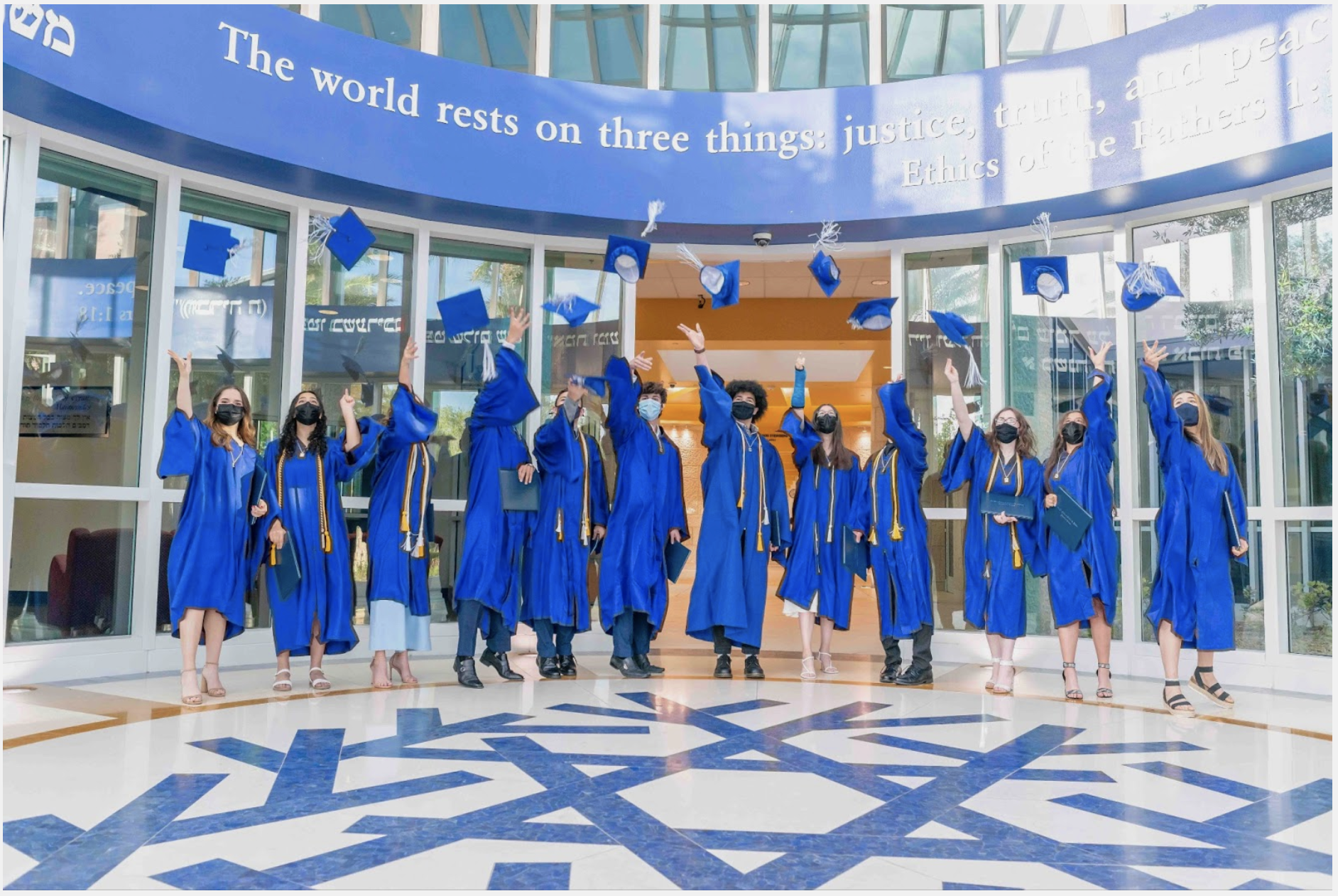
In a year when most schools were closed, our seniors — and our entire school community — worked together to live our school values: in spite of challenges, we supported one another to teach and learn in-person, pivoting in rational, informed ways, one day at a time.
What a strange year this has been for our graduating students. COVID was certainly their "senior surprise" — but other challenges materialized as well. Their grit in powering through it and asking for social and emotional support when needed yielded realistic strategies they’ll tap when life presents new obstacles and crises.
Moving Forward, Navigating in Real-Time, and Asking for Help
Winding back the clock to the start of high school for the Class of 2021, these rising adults couldn’t anticipate that their graduation year would be characterized by upheaval and uncertainty. COVID shuttered schools, stymied summer plans, and sequestered these students in their homes as they closed out junior year. Returning for in-person instruction after months of going dark on campus was scary. Students and their teachers lived each day as though they’d stepped onto the set of a dystopian, virus-running-amok movie (think, Andromeda Strain or I Am Legend): mask up, queue for temperature checks, socially distance (“leave room for Moses”), report a minor headache, avoid congregating with friends, sanitize everything. But the drama was real and living in it would be an exercise for them, their families, and their entire school community in navigating in real-time what was once mundane but was now potentially deadly: the formerly “normal” routine of attending school.
In knocking down this school year, I would argue that the single most important lesson a school could teach was “how to exhibit grit and flexibility in the face of change.” This entire year, our extraordinary seniors have shown up and showed out. Their teachers’ and their families’ expectations that they keep going — staying focused on the normal tasks of attending classes, completing projects, and taking tests — occupied them constructively, limited the time available for worry, and modeled the behaviors they’ll need throughout life. Through COVID; the appearance of new students mid-year as their families fled high-positivity states; the unexpected passing of our founder and benefactor Sheldon G. Adelson; and the social-emotional isolation that deprived youth of teenage memory-making, our seniors kept moving forward. That motion was inconsistent and sometimes tacked in ways that temporarily appeared backward and herky-jerky. It often included periods in which students tapped out and needed each other, our counselor, their teachers, and our leadership to pick them up, build temporary guardrails to right their headings, and give them (multiple) loving pushes. But, ultimately, isn’t that what a great school community does to take care of its members and live its values?
The 2021 Adelson Educational Campus graduation celebrated our seniors and savored this one final moment together at the end of their journey towards commencement. As I handed each senior their diploma and watched them move their tassels, it resonated with me how much the attitude of these graduates personifies our school mission and exemplifies the spirit of our founders. Thank you to the many team members — parents, faculty, coaches, and leadership — who came together to support our seniors over the past year and throughout high school. We are so proud of these remarkable students and the resilience they have shown this entire year — what they learned here and the mindset they built will apply to every challenge they face in their lives. That why we say that we say that the Adelson Educational Campus delivers an Education for Life. Congratulations graduates!
Masked Instruments Still Make Sweet Music
How do you maintain COVID-19 mitigation protocols when making music — an art form that requires exhaling breath forcefully to play wind instruments? You get creative, like our Adelson Arts Chair, David Philippus, who discovered that everyday objects can effectively block air flow.

This school year is about can, not can’t. Though instruments are masked, our students still make music!
How do you maintain COVID-19 mitigation protocols when making music — an art form that requires exhaling breath forcefully to play wind instruments? You get creative, like our Adelson Arts Chair, David Philippus, who discovered that everyday objects can effectively block air flow.
MacGyvering Safety Solutions in the Band Hall
Schools returning for face-to-face instruction are navigating several challenges -- one of which is developing masking protocols. This is especially important for band classes in which blowing air is fundamental to the art form. For our string players and percussionists, band class is mostly business as usual: they simply put on their masks and play their instruments. But for our woodwind and brass players, maintaining COVID-19 safety means masking the instruments to prevent breaths blown into clarinets, horns, etc. from moving into the surrounding airspace.
Our intrepid band director and Performing Arts Chair, David Philippus, crafted a variety of unusual masks -- including draped cloths and elastic food storage covers, with each mask custom-fitted to its own instrument. Dave’s creative thinking and can-do problem solving shows that masked instruments still make sweet music at The Sheldon Adelson Educational Campus — and they can do the same on your campus! We're curious to see the creative solutions devised by other band directors... please share!
Alternative History as a Route to History
Diplomacy, policy, and governance today requires understanding the intricacies of national origins. What would a nation look like if the relative influence of its founders — or the actions of pivotal leaders along the way — varied from the course of events we recognize as history? High school students tackle a PBL addressing this theme applied to Modern Israel.

Diplomacy, policy, and governance today requires understanding the intricacies of national origins.
What would a nation look like if the relative influence of its founders — or the actions of pivotal leaders along the way — varied from the course of events we recognize as history? High school students tackle a PBL addressing this theme applied to Modern Israel.
One Teacher’s PBL Approach in a Modern Israel Course
History is a tricky subject to teach. Looking backward is taught with the intention of looking forward, but instruction can often lapse into knowledge-level memorization of facts, timelines, and maps. Digging deeper to the application, analysis, synthesis, and evaluation of ideas requires an active context in which students can create something tangible in the present. In formulating her plan to engage students in learning about the modern state of Israel, teacher Ayelet Blit brainstormed with colleagues to hatch the Streams of Zionism PBL: What would Israel look like if the vision of a single Zionist leader was the only one that prevailed? This became the driving question that Morah Blit posed to juniors and seniors in her Modern Israel course at the Adelson Educational Campus (Las Vegas, NV). “It is very challenging to fully understand today’s Israel without knowing and understanding the different ideologies that were there in the beginning. Israel today is a combination of all of them. So, the main goal was to learn and understand the different streams, their leaders, and ideologies,” notes Morah Blit.
Like any butterfly effect, slight variations in the timeline of history would amplify to produce a different world than we see today. Learning and understanding the key moments and movements in our history forces students to examine causality – and consider deeply how today’s governance shapes their own futures. Alternative history is not revisionist history – it empowers students to formulate comparative “what if” scenarios and extrapolate how the students are the architects of their own futures, and the future of their world. From books such as “Abraham Lincoln, Vampire Hunter” and “The Difference Engine” to TV series including and “The Man in the High Tower” and “Timeless,” alternative history pushes us to draw connections between then and now, thinking critically about the actions we take in the present -- and the resulting history those actions yield.


Setting Up the Problem
To draw the connection between Israel then and Israel now, Morah Blit formed student teams to research prominent Jewish visionaries. These leaders and philosophers consisted of Theodor Herzl (political Zionism), Ahad Ha’Am (Cultural Zionism), Dov Ber Borochov (Socialist/Labor Zionism), A.D. Gordon (Socialist/Labor Zionism), Rav Kook (Religious Zionism), Ze’ev Jabotinsky (Revisionist Zionism). She then asked students to develop and articulate a re-imagined Israel according to each visionary. This included consideration of the geographic location of the State of Israel, system of governance, economic structure, and national language. Along the way, students were invited to invent and produce a variety of artifacts rooted in, and representative of, their visionary’s Zionist perspective, including a constitution, a 3D model of a typical city, a newspaper front page, and a flag.
Teams culminated their work by presenting completed projects to peers and faculty and engaging in a question-and-answer session about their reimagined Israels. For example, a team focusing on Herzl discussed their unique choice to situate Israel in present-day Argentina and establish German as the national language. Emphasizing the importance of culture and leaning in their country, the team created and showcased a Minecraft animation of the local university. The research, collaboration, critical thinking and development process was evident in each presentation – and the audience gained new insights to modern Israel through each team’s synthesis of alternative histories. Morah Blit was elated with the outcome: “They stepped up and presented with confidence. They definitely delivered.”
Next Steps…
As this phase of the Streams of Zionism project wraps up, Morah Blit notes that this is really just the beginning of her students’ examination of Modern Israel. She notes, “Our work is not done yet. Each team researched only one stream and created an imaginary Israel that represented the Zionist leader’s ideology and personality. Through different activities, students are now learning from each other about the streams researched by peer teams. Additionally, teams will create electronic games about their streams, in Jeopardy-style formats, for use by sophomores in their Humanities class.”
Morah Blit shared her final thoughts about the biggest take-aways from the Streams of Zionism PBL: “First, I hope my students will be able to have conversations about Israel with a deeper understanding of its basic complexity. How did these visionaries influence Israel? On what, and how did they needed to compromise? How are these streams manifesting themselves in Israel today? And second, I hope that they will be able to apply different learning and life skills they used here when they are in college and later in the workforce. The soft skills they grew during this project will serve them throughout their lifetimes.” And those lifetimes will be students’ own histories in the making.
The bottom line: Alternative History PBLs push students to think deeply about the interconnected sequence of events and the human drivers who shaped the world we now know. If the balance of power attributed to celebrated (or vilified) leaders, visionaries, explorers, philosophers and scientists shifted — or if a small, but impactful event caused any of them to change course even slightly — how would that disruption in the timeline manifest itself in the world we now know? The problem requires a high level of research, analysis, and synthesis, with student teams achieving surprisingly different outcomes.
First published in the Pride Blog, Adelson Educational Campus
Photo credits: Camille McCue
Most Likely to Succeed
Education. We all got one. What does it mean now to be educated, how do we structure school, and what makes the next generation, Most Likely to Succeed?
Posts
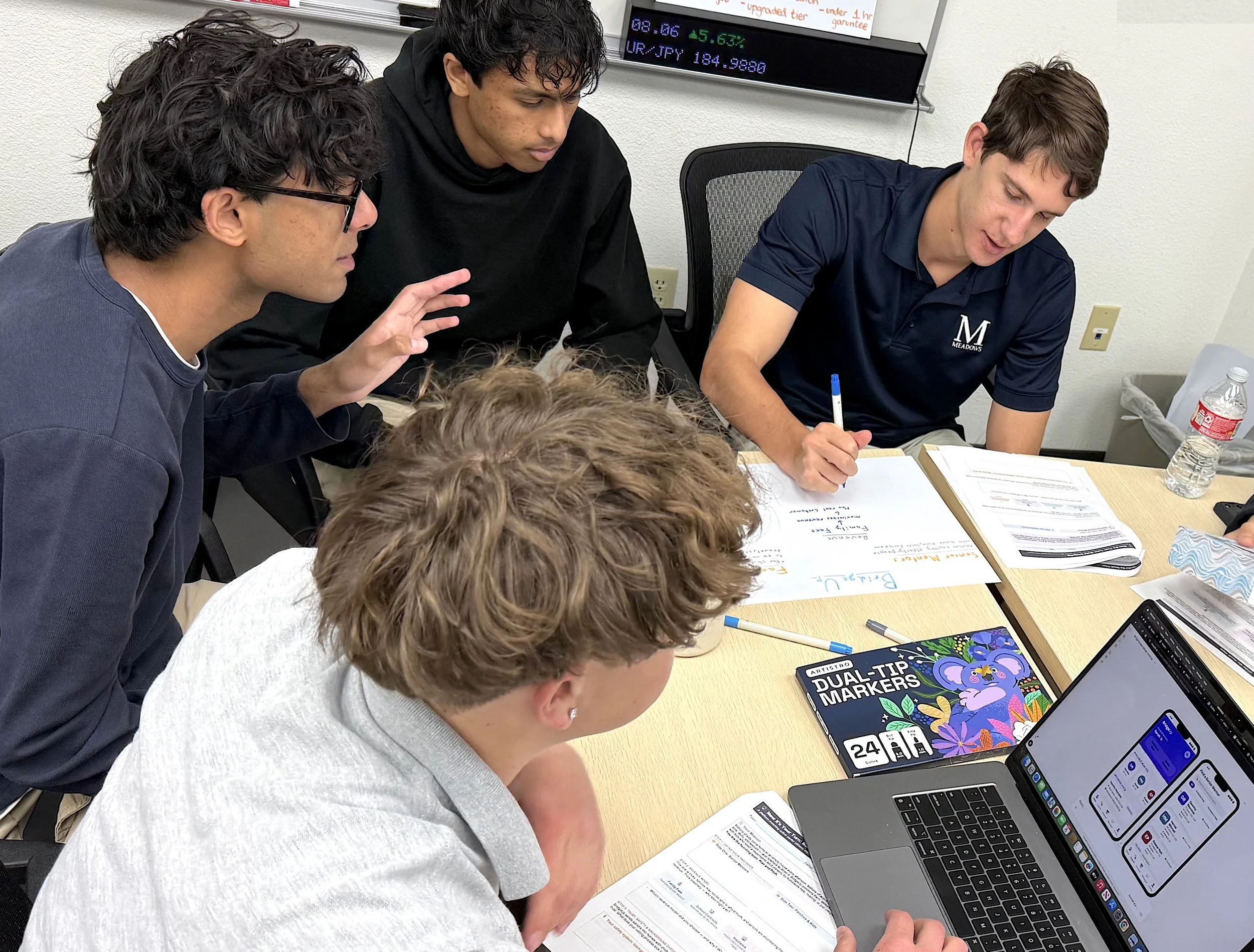
School’s out, but DECA advisors are already planning for next season. Prepare now for the challenge regarding ICDC absences. To colleagues, these feel egregious, as competitors spend only 15 minutes before judges while the rest is seen as “fun.” The frustration is real, but DECA conference engagement is about so much more than just competition. Here are the evergreen skills students are actually building.