Why DECA Students Missed Class – And Why It Was Worth It
School’s out, but DECA advisors are already planning for next season. Prepare now for the challenge regarding ICDC absences. To colleagues, these feel egregious, as competitors spend only 15 minutes before judges while the rest is seen as “fun.” The frustration is real, but DECA conference engagement is about so much more than just competition. Here are the evergreen skills students are actually building.
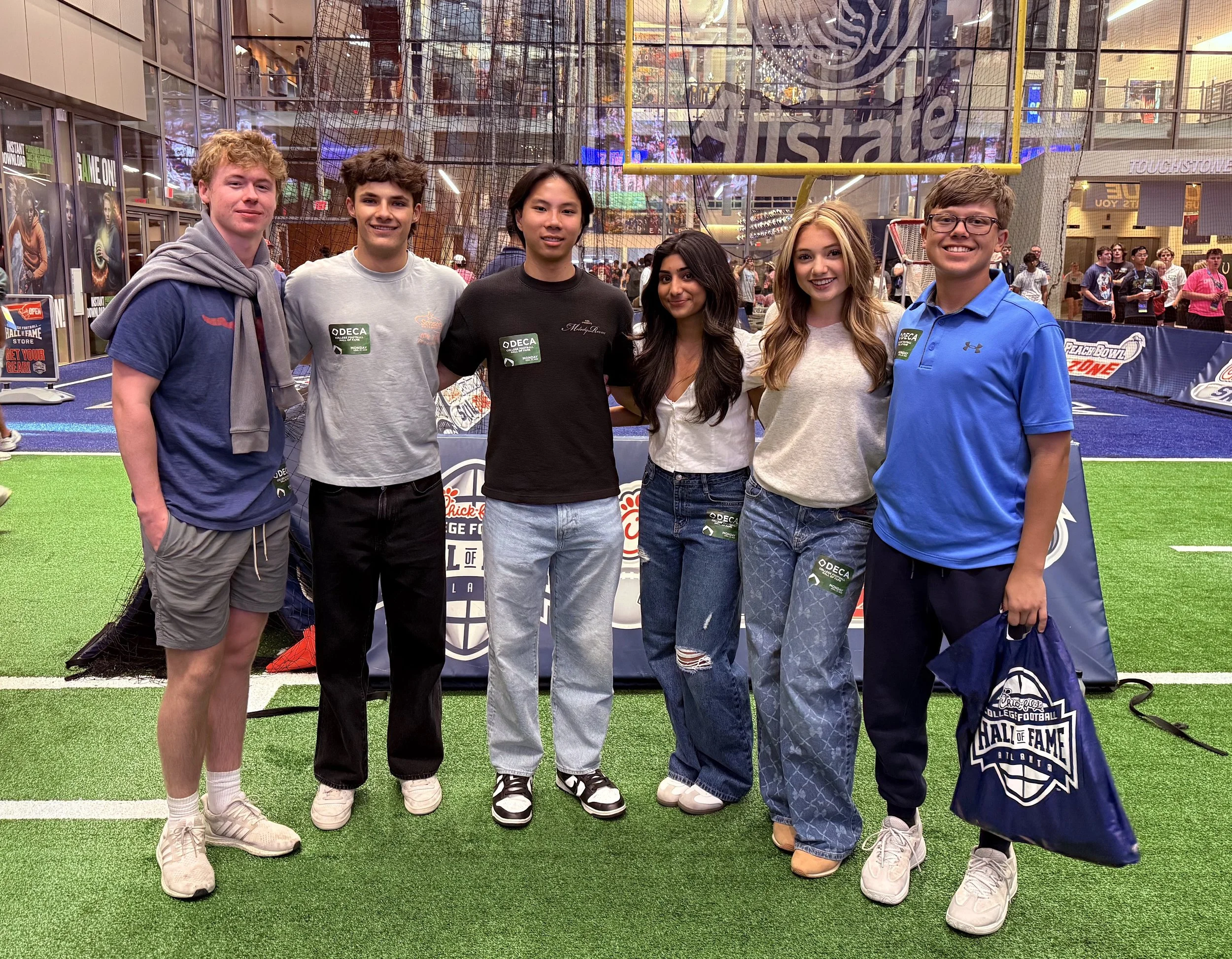
Meadows DECA ICDC competitors visiting the College Football Hall of Fame in Atlanta, 2026.
School’s out for the summer, but DECA advisors are already planning for next season. There is one conversation worth preparing for now: the challenge regarding ICDC absences. To colleagues, these absences often feel egregious, especially when they hear that competitors spend only 15 minutes before their judges and that much of the remaining time is spent having "fun." The frustration is real, and it is felt by both DECA advisors and students. However, DECA conference engagement is about so much more than just the competition. Here are the evergreen skills that students are actually building from the experience.
The Conference is the Curriculum
ICDC is an immersive, high-stakes professional simulation starts the moment students board their flight without their parents. Students do things that no classroom assignment replicates. They:
Manage independent travel – flights, schedules, unfamiliar city logistics, time zone adjustments, early alarms, wrinkly business attire, food forages, hotel gym workouts, daily planning – with zero parental scaffolding.
Decode a convention program and navigate a conference hall the size of a small town to arrive at their competition rooms on time.
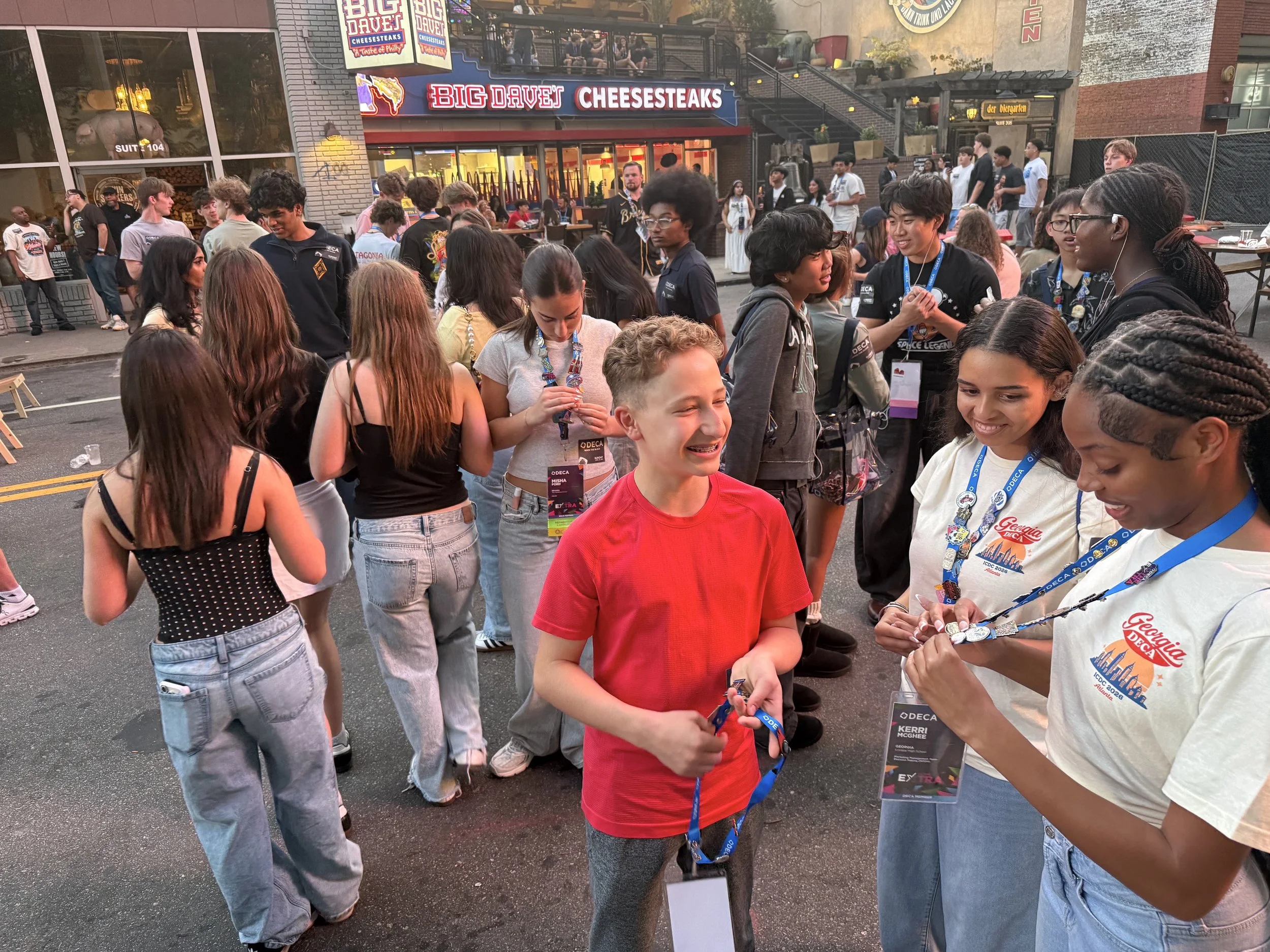
Walk up to strangers from other states and countries, initiate conversations to exchange pins, and build the foundational business skills of establishing rapport and negotiating in real time with other teens and adults.
Support one another under pressure: competing hard, cheering each other on, and holding it together when nerves hit.
Represent themselves, their peers, their families, your DECA program, and your school with poise, professionalism, and pride.
Add an internationally recognized credential to their resumes.
Manage missed assignments and keep up with coursework from their hotel rooms – a direct simulation of what it means to travel for work and still meet deadlines back at the office.
Reflect on their own performance afterward and begin identifying what it will take to level up – not just at DECA, but in any high-stakes professional environment where they’ll be measured against other capable, driven individuals.
These are the evergreen competencies that show up in college interviews, first internships, client presentations, and every professional networking event for the rest of their lives. DECA students practice these under real pressure, in a real environment, with real stakes.
They Also Had Fun
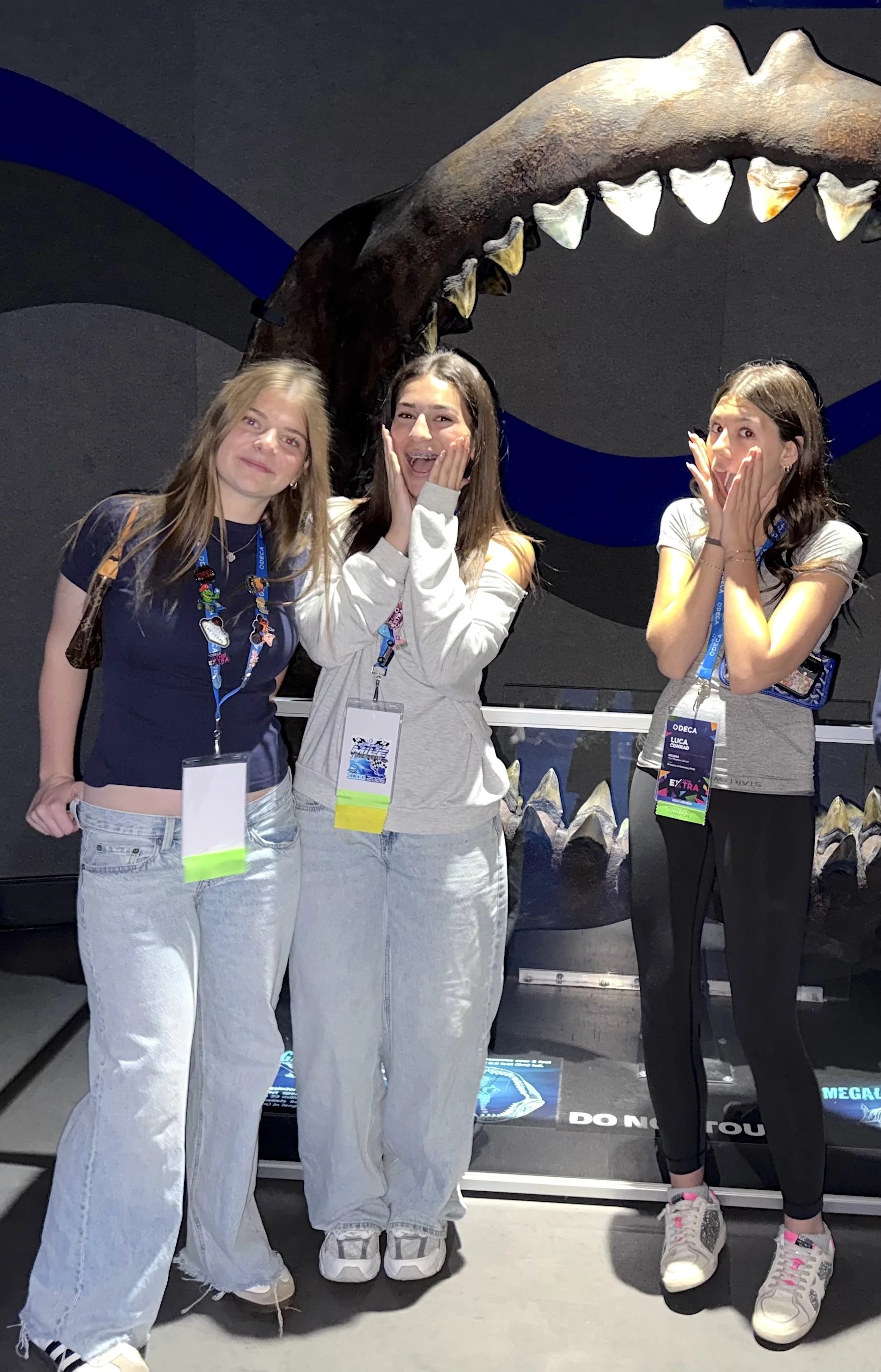
ICDC 2026 students visited the College Football Hall of Fame and the Georgia Aquarium. They explored Centennial Olympic Park and noshed at a DECA Street party. They made friends from schools they’d never heard of, and experienced Atlanta as young people learning to move through a new locale with confidence.
To some colleagues, that sounds like the problem. But fun is not the problem – it’s a critical conference component. Part of what we are trying to produce as educators is people who engage in healthy, positive play as payoff for productive and challenging work – people who can be fully present at a dinner table or sports event with a client the same night they succeeded in a high-stakes presentation. Such a skill cannot be taught from a textbook.
A Challenge to My Colleagues
For our students who have earned the right to compete at a DECA state or national conference, we can ask our colleagues to think differently about the days of missed classes. Those days are full of a kind of learning that is harder to grade, harder to measure, and – I would argue – harder to replace than almost anything else we offer in the daily grind of school. The student sitting in a hotel room finishing assignments at 11 PM after a full day of competing, networking, and managing their own life is applying skills that their teacher colleagues helped build. As one student shared, “I feel like everything we do at school led to this moment. Reading, writing papers, debating, teaming up with classmates, getting things done on deadlines. And now being here at ICDC and having this competitive experience is amazing and so fun and truly something I’ll remember forever.”
So the next time colleagues balk at students missing classes for ICDC, ask them to extend the same flexibility they’d expect in the professional world. Then ask the student to report back when they return. The conversation that follows might change how that colleague thinks about what school is actually for.
Turns Out, The Entrepreneurial Kids Were Here All Along
They were always here – the kid who doodles logos in her notebook, the one who wants to know how the pitch lands and how the money works – and in two years, DECA has given them their people, their place, and a ticket to compete against 22,000 peers at the International Career Development Conference in Atlanta.
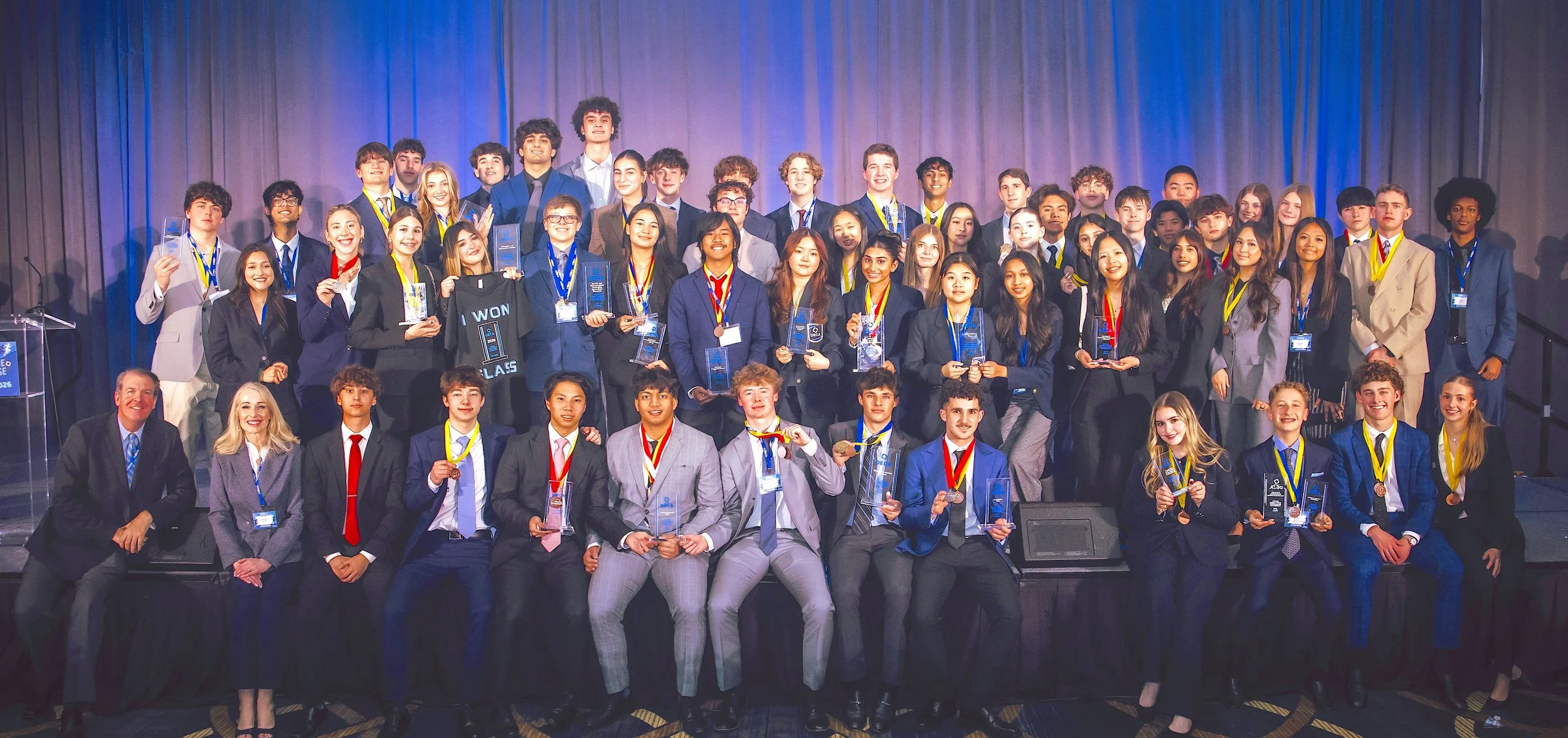
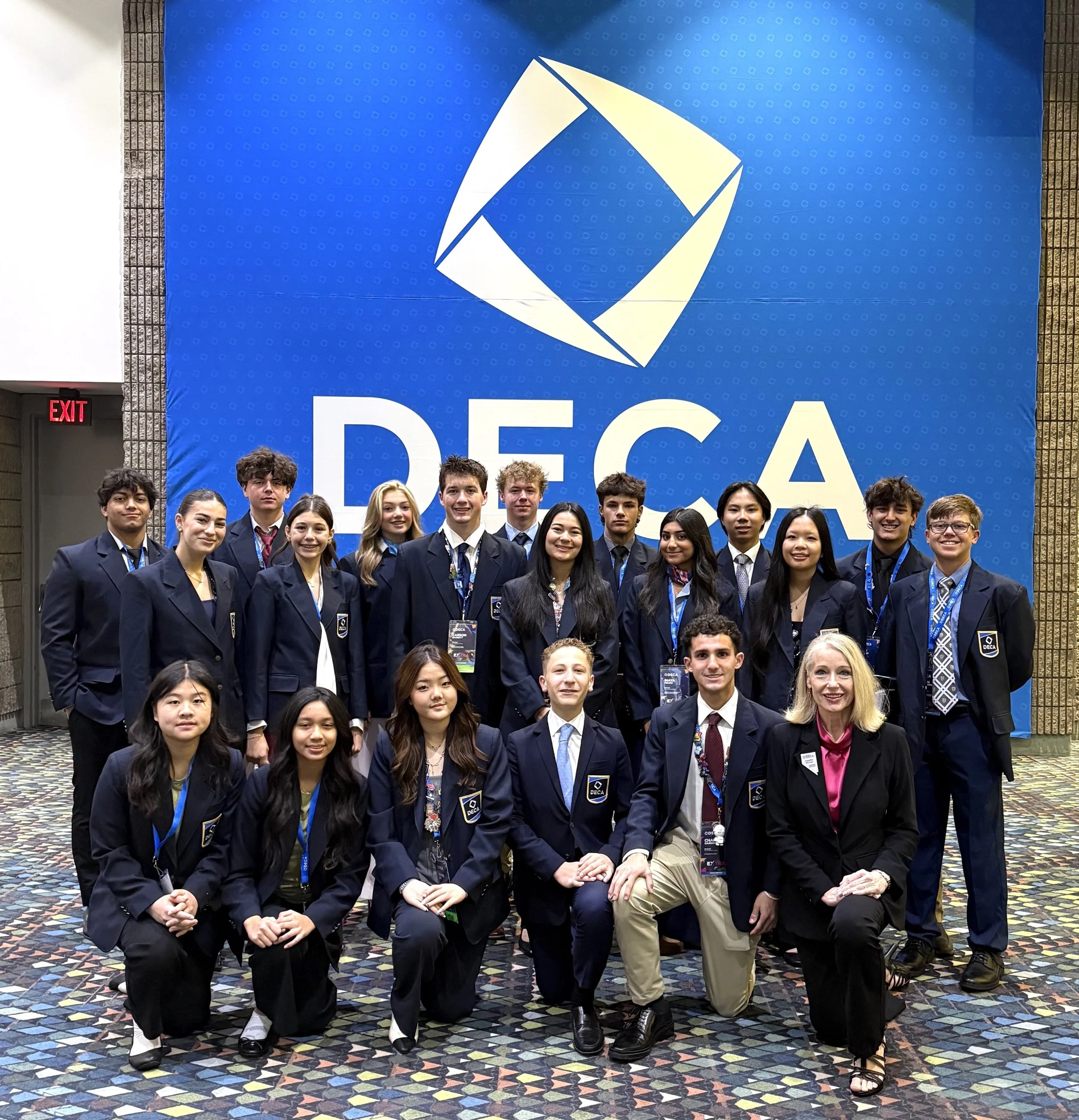
The Meadows School DECA Chapter competing at SCDC (State Career Development Conference), 2026.
They were always here – the kid who doodles logos in her notebook, the one who wants to know how the pitch lands and how the money works – and in two years, DECA has given them their people, their place, and a ticket to compete against 22,000 peers at the International Career Development Conference in Atlanta.
From Zero to ICDC
Two years ago, The Meadows School had no DECA program. Zero students. Zero Glass trophies. What it did have was a community of kids who were quietly hungry for exactly that kind of challenge, students interested in startups and brand strategies, but who hadn’t yet found their people or their place on campus.
Fast forward to today: 66 students, 22 top awards at the Nevada State Career Development Conference (SCDC), and a winning cohort heading to Atlanta this April to compete at ICDC – the International Career Development Conference – against 22,000 peers from around the globe. Not bad for a program that didn’t exist the day before yesterday.
Building the Runway
When I joined The Meadows as Director of Innovation, my mission was to build vertical coursework in Computer Science, Engineering, and Business/Entrepreneurship inside a school with a proud liberal arts identity. That meant carving out space for learners who had always been here but didn’t always feel seen or served: the entrepreneurially-minded kid, the one who doodles logos in the margins of her notebook, the one who wants to know how the money works and how the pitch lands. DECA became their co-curricular home. And once we opened the door, they came flooding through.
What DECA Actually Looks Like
DECA prepares emerging leaders and entrepreneurs in marketing, finance, hospitality, and management – the competitions span an enormous range. This year, our students tackled all of it: business plans (sports operations research, innovation and international business plans), outreach initiatives (financial literacy, community awareness), integrated marketing campaigns, financial consulting presentations, professional selling pitches, and impromptu case study events where the only prep you can do is train your brain to analyze, structure, and deliver under pressure, in real time.
The Prep: Months of Polish Before the Podium
The sequence of our preparation mattered. We started by viewing sample videos on YouTube from past winners. Then we moved to practicing scenarios and model pitches, learning to structure responses around DECA’s performance indicators. Then peer feedback – lots of “wait, say that part again but without saying ‘ummm’ – and draw a better logo!” Then something genuinely new: AI coaching via Flint, which gave students concrete, objective feedback measured directly against performance indicators. Not “good job!” — actual critique. Then our Meadows Mock DECA: a full-scale, off-campus simulation with expert judges from our parent community and greater Las Vegas. Real judges and real pressure. The dress rehearsal that made the culminating competition possible.
And finally, SCDC. One thousand competitors. Professional attire. Schedules to navigate, nerves to manage, presentations to deliver. Our students walked in polished and walked out with 22 awards and a host of finalist medallions.
The Skills That Stick
The trophies are great, but what I’m proudest of is the portfolio of portable skills our students built along the way: how to research and synthesize, structure an argument for a skeptical audience, build a compelling deck, and stand in front of a room of strangers, all experts in their fields, and close the deal.
From our post-competition survey, students felt strong in presentation skills. The area they flagged for more work? Financials. I love that they said that. So right now, in the weeks before ICDC, we’re digging into the accounting equation, balance sheets, and income statements – using Enron as our case study. Nothing makes numbers come alive quite like a cautionary tale involving billions in losses, creative accounting, and the spectacular implosion of a company that once called itself the most innovative in America. Ethics are probably the most important part of the lesson.
Onward to Atlanta
This April, our top competitors head to ICDC in Atlanta against 22,000 peers from across the globe. The competition will rise significantly. And that’s the whole point: going beyond the walls of our campus, then beyond the border of our state, is what it takes to understand your true potential. You can’t calibrate yourself against the best of the best without actually standing in the room with them.
Two years ago, zero students. Today, 66 students, 22 DECA Glass awards, and a cohort of young entrepreneurs who know how to prepare, polish, and pitch. Students who found their people and their place.
Atlanta, here we come.
Teamwork and Trophies: The Evergreen Value of Student Competitions
Teaching our youth that they will experience both wins and losses – and how to take the next step following either outcome – is one of the most important lessons we can impart to them. And mentoring students to work effectively in team configurations is one of the most evergreen, and difficult, lessons we can share in steering the outcomes of competition toward wins.

In guiding students to become both constructive collaborators and resilient competitors, we help them build powerful skills to thrive in the next phase of their academic and professional careers – and become leaders on the world stage.
Revving up for spring semester means that annual student competitions are getting underway. Chaperones are eagerly volunteering for overnight trips (are they?!?) and teams are excitedly (or frantically) pushing toward their head-to-head showdowns. After years of helming Future Cities and now supporting my faculty coaches in their own lead-ups to competition, I know that these next few weeks are grueling nail-biters (and honestly, more memorable than the daily grind of classes in cold, dark, January). But why compete?
Competition, aka The Pencils, Pixels, and Panic of Student Showdowns
Why put in the endless hours before and after school and on weekends with your army of DECA-preneurs, debaters, and Cyberpatriots for the “thrill of victory, or the agony of defeat” (nod to the premillennial sports broadcast, Wide World of Sports)? Teaching our youth that they will experience both wins and losses – and how to take the next step following either outcome – is one of the most important lessons we can impart to them. And mentoring students to work effectively in team configurations is one of the most evergreen, and difficult, lessons we can share in steering the outcomes of competition toward wins.
A well-known parenting coach recently slammed competition as possibly “a bad thing” when viewed as a zero sum game. Sure, there are winners in competition, but that doesn’t mean everyone else is a loser. Competition is fundamental to the work of every American in our capitalist, democratic society; it helps us chase a goal, celebrate those who earn the highest honors (whether that is us, or others), and see with transparency the gold standard we should strive for. Who hasn't been inspired when seeing a buzzer-beater in a championship ball game, hearing a child correctly spell the winning word in a bee, cheering on our favorite American idol, or watching a successful SpaceX launch? Working towards big goals, along with others headed in the same direction, energizes our lives and gives us purpose. It also yields a roadmap for our daily work. Failure is just as important as success as it provides insight about "how not to do things" the next time. There is no inherent “good” or “bad” in competition, just lessons to be learned and carried forward.
Huddle Up! Winning (and Losing) Together
It’s important to note here that students rarely compete alone: more often than not, they usually compete in collaboration with teammates against opposing teams. Some may view this as tribal “us” versus “them” but – whether you’re talking about politics, sports, grant funding to universities, or Mock Trial events – such is the infrastructure of America. Team competition requires the collaboration of multiple individuals who bring unique skills to the group endeavor, striving collectively to attain new levels of achievement. So… yay teamwork, it makes the dream work! But we educators know that it’s not so easy: the implementation of team constructs in K12 classrooms is daunting. I routinely field calls from parents lamenting the woes of collective work – “my kid is the smartest and ends up doing all the work himself, what’s the point of this?” Or as a 2023 EdSurge article so artfully put it, “Why does group work suck so much? And why do teachers and professors continue to assign it?” A former student, Theo Cooper, who’s now an engineering major at MIT shared the answer with our FIRST robotics team on a recent alumni visit: “The easy problems have been solved, so working on anything meaningful means working on something inherently complex – and that will require many smart people putting their smart minds together constructively.”
To successfully cultivate K12 teamwork, there’s investment to be done: teachers require professional development to better guide collaboration so that we can effectively build high-performing student groups and teams. Just assigning roles to students is insufficient – they need guidance in emulating the agile paradigm of multiperson, time-sensitive workflows implemented in the tech world and beyond. One option is for educators to become certified Agile Classroom Teachers (through any of several online providers; the professional development efforts are well worth schools’ time and money). Such an evolution in how schools approach teamwork may not be easy, but if giant corporations including IBM can do it, and did do it under former CEO Ginny Rometty, then schools can, too – and doing so will not only give our kiddos the edge now, but in their professional futures, too.
From School to the World Stage
As we enter 2024, let’s stay focused on the ulterior end game of K12 contests: today’s preparation for school-based collaborating, competing, winning, and losing serves as a trial run for life's real-world experiences (no, it’s not just to hoist the trophy, although that’s pretty cool!). Our job is to coach our students to evaluate objectively, “What does it take to reach the top?” In guiding students to become both constructive collaborators and resilient competitors, we help them build powerful skills to thrive in the next phase of their academic and professional careers – and become leaders on the world stage.
Kids, not Widgets
What emerged from the Cold War -- an automated, industrialized, top-down approach to teaching and learning -- is opposite the inventive, progressive environments we embrace in all other facts of life from business to entertainment. You can't create new ideas if you're constantly herded back to the beaten path.
The American education system is due for a refresh. We've all seen the photographs of "then" and "now," showing students sitting in the same configuration of desks as their parents and grandparents, subjected to the same unevolved school experience that's been served up for decades. What emerged from the Cold War -- an automated, industrialized, top-down approach to teaching and learning -- is opposite the inventive, progressive environments we embrace in all other facets of life from business to entertainment.
The go-betweens of teachers in brick-and-mortar buildings separate our students, the very people we're responsible for "training up," from the world for which we're purportedly training them. Not every teacher instructing writing is a published author. Not every teacher instructing science has conducted experimental research. Not every teacher instructing drama has performed on Broadway. That awful adage, "Those who can do, those who can't teach," exists because the experts who are doing-the-do are infrequently the people coaching our kids. How have we come to think of teaching as its own profession, as opposed to all professions inherently possessing a teaching component... and a teaching responsibility? As one of my students (Jason) pointed out today, "Why are there degrees in entrepreneurship? That makes no sense." He's right. It's instructionally equivalent to a culinary program teaching the name and function of every pan, spice, and knife, but never mentoring novice chefs in the smelly, difficult process of skinning and de-boning the fish after they've reeled it in from the ocean. There's no "cheffing" without fishing and gardening. No "entrepreneuring" without depth and experience in technology, engineering, finance, data analysis, and other underlying meaty content that sparks the creation of a new product or process around which an entrepreneurial venture can be constructed. No "teaching" without actual subject matter knowledge and in-the-field experience working as a practitioner in the dirty work. If you're training to be a French teacher, what's more important in your preparation: spending a semester in France, Haiti, or Quebec, or spending a semester in a methods course where you learn to craft bulletin boards featuring photos of Paris?
As for the curriculum itself, the never-ending list of standards we're supposed to make sure kids master ensures graduates emerge uniform, thinking in lockstep, and cookie-cutter in their sameness. Yes, there are basics kids must learn -- fundamentals that are requisite to learning anything in future years. Of course children still need instruction in reading, writing, and computing (i.e., "doing math"). And gaining fluency in the basics offloads learners' brains, reducing cognitive load and freeing them up for more advanced thinking. But marching every child through the same Factory of Fact Acquisition for 18 (or 22, or 26!) years does not produce the worldliness, the innovation, the judgement, or the compassion necessary to confront the increasing pace of challenges peppering us in our connected world. Immersion in Humanities is vital, but consider which is more important: knowing the names of Hell's residents in the Inferno, or analogizing their sins and crimes (and fates!) to today's politicians and irresponsible (Enron) businessmen? When it comes to mathematics, why force Calculus on everyone, when Statistics has greater reach and applicability in our daily lives (think polling, decision-making, medical treatments, purchases, insurance....)?
When I graduated from the University of Texas with a math degree, I didn't realize I would use my education to become an anti-education educator, but that's what happened. Teachers, schools, parents, and most importantly young people must fight back against the over-regulated institutionalization of the American public school system -- or risk losing our place on the world stage. You can't create new ideas if you're constantly herded back to the beaten path. In the 1970s, MIT's Seymour Papert envisioned learning experiences in which children use tools of the real world (including computers) to construct their own learning, free from overly scripted curricula that characterize most classrooms. “Do away with the idea that there should be uniformity of all schools and of what people learn." (Papert) Unfortunately, as fellow tech educator Gary Stager notes (in Paulo Blikstein's reflections on Papert's legacy), when it comes to teachers and teacher trainers, we "ignore [Papert] entirely... as manifest by his absence from teacher education texts, educational technology publications and school reform literature." We can no longer afford to ignore Papert's ideas, but more importantly, we teachers can no longer afford to ignore the individuality of our students, the very people to whom we've chosen to dedicate our professional (and sometimes personal) lives? What does it take to transform American education… and are we prepared to do it?
Most Likely to Succeed
Education. We all got one. What does it mean now to be educated, how do we structure school, and what makes the next generation, Most Likely to Succeed?
Posts
School’s out, but DECA advisors are already planning for next season. Prepare now for the challenge regarding ICDC absences. To colleagues, these feel egregious, as competitors spend only 15 minutes before judges while the rest is seen as “fun.” The frustration is real, but DECA conference engagement is about so much more than just competition. Here are the evergreen skills students are actually building.