No Civics, No Civilization
The decline of civics education, coupled with the ability of unchecked social media communications to make every voice count – regardless of whether that voice is researched and reasoned or not — is undermining our democracy.
America is my home, and the lens through which I view it is rooted in my own personal history. I was not born here. My Welsh father married my Texan (and Daughter of the American Revolution) mother, who delivered me in London, England. We returned stateside when I was three, never returning to the United Kingdom. When I enquired as to why we never visited my birthplace, my father replied, “It’s bloody cold over there.” Dad was a professor of microbiology, and learning about everything was his passion. I recall him studying to obtain his citizenship when I was child. The content wasn’t complicated compared with what he knew about genetics, history, and Latin – but like everything he tackled intellectually, he completely devoted himself to learning every nuance of the material. And the content was vital to him “becoming” an American. My father also loved American football (he was a huge Cowboys fan), and even when his health declined, he always stood with hand over heart during the playing of the National Anthem. Reflecting on what it means to act as an American, not simply be an American, is a behavior that was reinforced by both my parents during my upbringing.
Our nation – my home – is currently experiencing upheaval with regard to our obligations as American citizens and our mission as a country. I believe that a central issue of this upheaval is the notion that, “one person, one vote” (as defined by our Constitution, its amendments, and subsequent court cases) is fundamental to our democracy. To function successfully as a democratic nation, the equality doctrine is rooted in an expectation that citizens are informed, rational agents in our governance. Unfortunately, the decline of civics education in our public schools, coupled with the ability of unchecked social media communications to make every voice count – regardless of whether that voice is researched and reasoned or not – is undermining the democratic goals of the Founding Fathers. From law to science, objective truths do exist. The Earth is not flat, gerrymandering does impact voting outcomes, and ulcers are caused by bacteria, not stress. It is our obligation as citizens to investigate, quantify, and propagate only that information which we know to be true. “A lie stands on one leg, the truth on two,” (Benjamin Franklin, Poor Richard's Almanac, 1735) – and while it may be easy today to populate conversations, podcasts, and Twitter feeds with “alternative facts,” only the truth stands stable when pushed by unbiased evaluation.
Asking students in American classrooms not only, “What do you know?” but also, “How do you know it?” in Socratic discourse, requires more work of the educator than simple didactic, knowledge-level instruction. It entails planning, practicing, deep knowledge, and an appetite for debate to build the habits of mind in our young adults that allow them to fully enjoy American liberties. It also requires more work of the student: he cannot passively absorb information and expect to be labeled a winner when he’s merely displaying the disposition of a participant. The student must struggle, sometimes failing, and always re-engaging in his never-ending role as a learner striving for success.
Questioning, seeking truth, and demonstrating drive and responsibility are the obligations of every American, and the rewards are autonomy and freedom. Educating teachers in how to foster civic behaviors among our students is fundamental to our continuance as a strong and visionary nation. It is the duty of every American to know and live what immigrants must learn for naturalization, and to shun the ease of lazy group-think. As an educator, I feel obligated and privileged to model these behaviors for my students each day. This begins with laying down my tweeting phone and investigating, cogitating, and discussing to cut through the white noise. And for me, it also includes picking up my hand to heart, like my father and mother, in recognition of our hard-won freedoms. For others, this recognition is observed with different behaviors – we don’t all have to agree on the way we exhibit our Americanism. Ultimately, “we have a right, also, in various ways, to act upon our unfavorable opinion of any one, not to the oppression of his individuality, but in the exercise of ours.” (John Stuart Mill, On Liberty, 1859) Whether born American or made American, it’s both our right and responsibility to act American.
Photo Credit: Andy Blackledge, https://www.flickr.com/photos/hockeyholic/16462610518
Schools, Showcase Your Teachers
Human capital matters. Showcase your teachers to parents, and potential parents, frequently.
What does it take to sell a progressive, independent high school when AP and SAT scores don’t tell the whole story? And how do nontraditional middle schools – which don’t even have such data points (and can’t tally college admissions) – demonstrate their worth and success?
As schools migrate to “21st century instruction,” in which soft skills and project-based learning are foundational, accessing a school’s merit becomes more challenging to quantify. Parents debating hefty tuitions for their children’s education want to know their investment is sound. They may intuit that preparing their kids to flex and pivot in the messy career world requires more from schools than antiquated drill-and-practice – but their own experiences in traditional institutions may cloud their abilities to judges what matters now.
One of the most actionable ways in which schools can convey their qualitative worth, and ultimately sell the value of their unique educational offerings to families, is to showcase its teachers.
Extraordinary teachers don’t just clock-in for nine months of the year. They train constantly, via self-study, advanced coursework, and fellowships, and they engage in their careers by publishing and presenting at professional conferences as well as mentoring others. Extraordinary teachers adjust and adapt their curriculum and instruction to connect with the actual students in the room, and they make their instruction relevant to recent events in the world around them. One administrator with whom I once worked marveled at an English teacher who, “had every minute of her day-by-day curriculum mapped out from September to May.” But while detailed planning is admirable, an inability and unwillingness to pivot and update, irrespective of subject area, indicates either a lazy teacher or a static content field. (In either case, there’s no need for a human at the helm: a robot is coming for that job.)
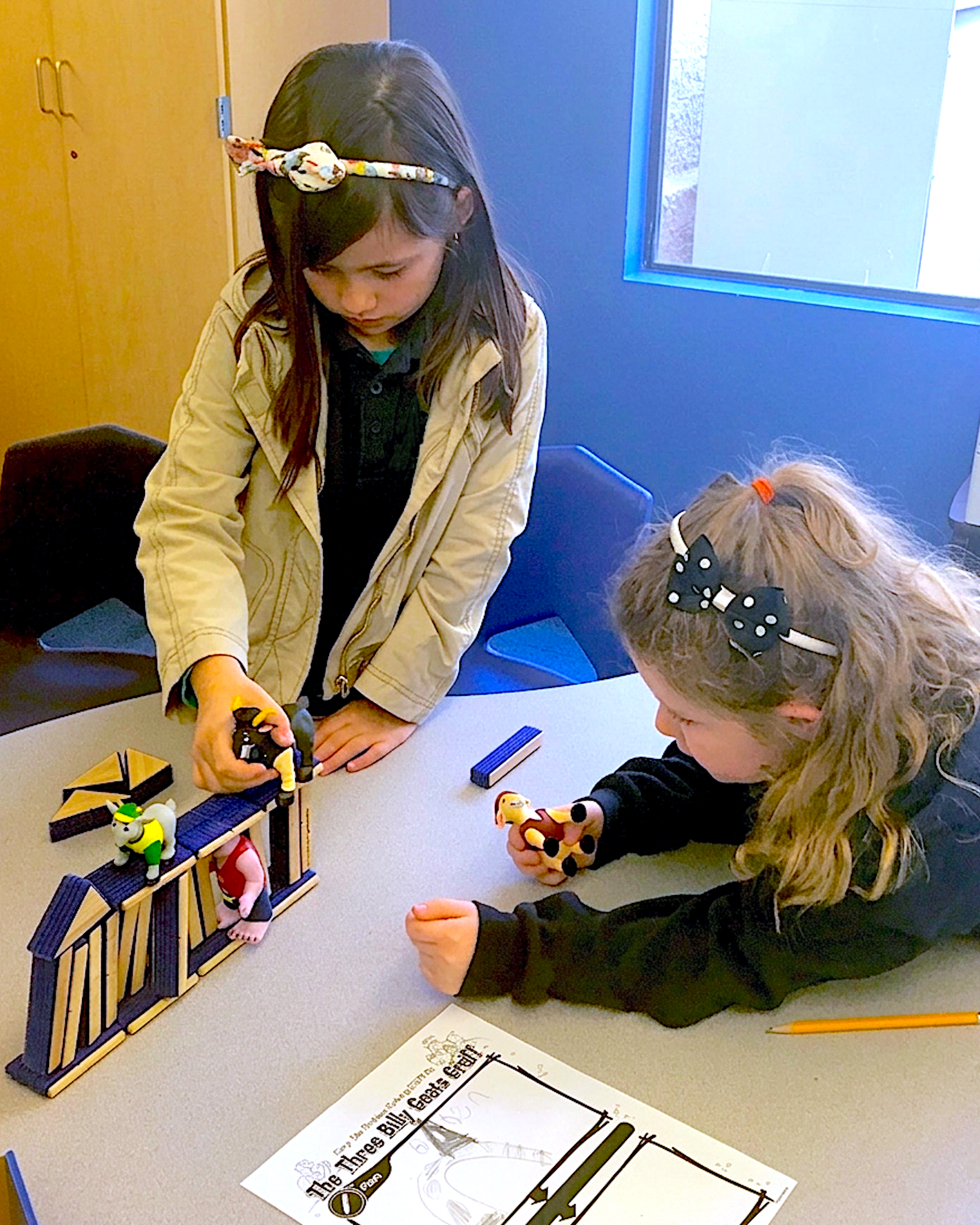
Extraordinary teachers also work to build in their students the skills and habits of adult professionals operating in the real world, adjusting to meet the age-appropriate needs of their learners. Herma de Ridder, a science teacher instructing early elementary students at the Alexander Dawson School (Las Vegas), coaches children as young as age five to keep a lab notebook tracking every experiment and observational study they conduct. She helps her students learn and use new vocabulary in context; plan their work by writing logical procedures (lovingly correcting their “kid spelling” in the margins); draw diagrams of lab setups; attach and label photos and collected samples; and draw conclusions from their findings. In short, she trains them to behave as scientific thinkers. Saying that Herma teaches science is insufficient to capture the full story, but seeing is believing: Dawson showcases what that entails by regularly bringing parents into her lab, inviting parents on field trips, and sharing those lab notebooks with them throughout the year.
While years of teaching experience and degrees can contribute greatly to developing quality teachers, non-teaching career experience matters, too. Our high school technology lead, Leon Wilde, is a former pilot, Evernote entrepreneur, and lifelong tinkerer. The authenticity of those skills goes a long way in coaching our students to innovate in the Adelson Startup Incubator. In recent years, I’ve witnessed him guide high schoolers to build and fly UAVs, construct a chair befitting Marilyn Monroe, and design and fabricate a “volcacho” (solving the bare nacho problem with a volcano of spewed toppings). Who Leon is as a person and a professional, not just his curriculum delineated on paper, are vital value adds which shape the learning experience for his students – value adds we actively showcase beyond the Incubator. That showcasing consists of welcoming visitors, meeting with collaborative partners and vendors, representing the school in external events and contests, appearing in virtual tour videos, and working with parents on Dine and Design nights – all events that go beyond the “typical” teaching duty.
Don’t cloister your teachers in their classrooms, trotting them out before parents only on back-to-school night. Don’t sell your curriculum as though it can be divorced from instruction, with “just any teacher” operating interchangeably in your teaching positions. Human capital matters. Showcase your teachers to parents, and potential parents, frequently. In the end, connecting the dots among students, teachers, and parents will help the adults making the financial investment appreciate the value add of the guides mentoring their children… and continue to do so long term.
Most Likely to Succeed
Education. We all got one. What does it mean now to be educated, how do we structure school, and what makes the next generation, Most Likely to Succeed?
Posts
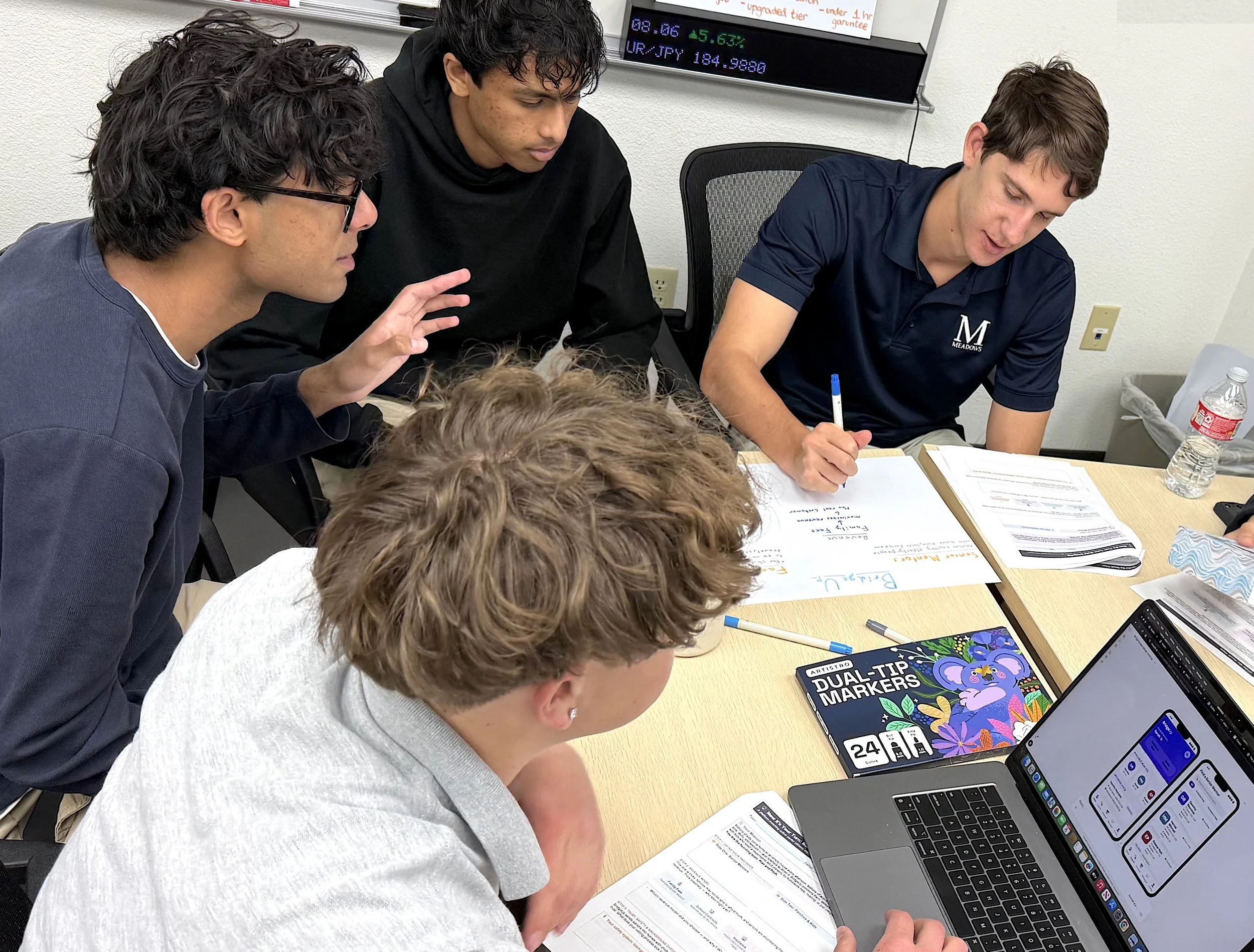
School’s out, but DECA advisors are already planning for next season. Prepare now for the challenge regarding ICDC absences. To colleagues, these feel egregious, as competitors spend only 15 minutes before judges while the rest is seen as “fun.” The frustration is real, but DECA conference engagement is about so much more than just competition. Here are the evergreen skills students are actually building.