Alternative History as a Route to History
Diplomacy, policy, and governance today requires understanding the intricacies of national origins. What would a nation look like if the relative influence of its founders — or the actions of pivotal leaders along the way — varied from the course of events we recognize as history? High school students tackle a PBL addressing this theme applied to Modern Israel.

Diplomacy, policy, and governance today requires understanding the intricacies of national origins.
What would a nation look like if the relative influence of its founders — or the actions of pivotal leaders along the way — varied from the course of events we recognize as history? High school students tackle a PBL addressing this theme applied to Modern Israel.
One Teacher’s PBL Approach in a Modern Israel Course
History is a tricky subject to teach. Looking backward is taught with the intention of looking forward, but instruction can often lapse into knowledge-level memorization of facts, timelines, and maps. Digging deeper to the application, analysis, synthesis, and evaluation of ideas requires an active context in which students can create something tangible in the present. In formulating her plan to engage students in learning about the modern state of Israel, teacher Ayelet Blit brainstormed with colleagues to hatch the Streams of Zionism PBL: What would Israel look like if the vision of a single Zionist leader was the only one that prevailed? This became the driving question that Morah Blit posed to juniors and seniors in her Modern Israel course at the Adelson Educational Campus (Las Vegas, NV). “It is very challenging to fully understand today’s Israel without knowing and understanding the different ideologies that were there in the beginning. Israel today is a combination of all of them. So, the main goal was to learn and understand the different streams, their leaders, and ideologies,” notes Morah Blit.
Like any butterfly effect, slight variations in the timeline of history would amplify to produce a different world than we see today. Learning and understanding the key moments and movements in our history forces students to examine causality – and consider deeply how today’s governance shapes their own futures. Alternative history is not revisionist history – it empowers students to formulate comparative “what if” scenarios and extrapolate how the students are the architects of their own futures, and the future of their world. From books such as “Abraham Lincoln, Vampire Hunter” and “The Difference Engine” to TV series including and “The Man in the High Tower” and “Timeless,” alternative history pushes us to draw connections between then and now, thinking critically about the actions we take in the present -- and the resulting history those actions yield.


Setting Up the Problem
To draw the connection between Israel then and Israel now, Morah Blit formed student teams to research prominent Jewish visionaries. These leaders and philosophers consisted of Theodor Herzl (political Zionism), Ahad Ha’Am (Cultural Zionism), Dov Ber Borochov (Socialist/Labor Zionism), A.D. Gordon (Socialist/Labor Zionism), Rav Kook (Religious Zionism), Ze’ev Jabotinsky (Revisionist Zionism). She then asked students to develop and articulate a re-imagined Israel according to each visionary. This included consideration of the geographic location of the State of Israel, system of governance, economic structure, and national language. Along the way, students were invited to invent and produce a variety of artifacts rooted in, and representative of, their visionary’s Zionist perspective, including a constitution, a 3D model of a typical city, a newspaper front page, and a flag.
Teams culminated their work by presenting completed projects to peers and faculty and engaging in a question-and-answer session about their reimagined Israels. For example, a team focusing on Herzl discussed their unique choice to situate Israel in present-day Argentina and establish German as the national language. Emphasizing the importance of culture and leaning in their country, the team created and showcased a Minecraft animation of the local university. The research, collaboration, critical thinking and development process was evident in each presentation – and the audience gained new insights to modern Israel through each team’s synthesis of alternative histories. Morah Blit was elated with the outcome: “They stepped up and presented with confidence. They definitely delivered.”
Next Steps…
As this phase of the Streams of Zionism project wraps up, Morah Blit notes that this is really just the beginning of her students’ examination of Modern Israel. She notes, “Our work is not done yet. Each team researched only one stream and created an imaginary Israel that represented the Zionist leader’s ideology and personality. Through different activities, students are now learning from each other about the streams researched by peer teams. Additionally, teams will create electronic games about their streams, in Jeopardy-style formats, for use by sophomores in their Humanities class.”
Morah Blit shared her final thoughts about the biggest take-aways from the Streams of Zionism PBL: “First, I hope my students will be able to have conversations about Israel with a deeper understanding of its basic complexity. How did these visionaries influence Israel? On what, and how did they needed to compromise? How are these streams manifesting themselves in Israel today? And second, I hope that they will be able to apply different learning and life skills they used here when they are in college and later in the workforce. The soft skills they grew during this project will serve them throughout their lifetimes.” And those lifetimes will be students’ own histories in the making.
The bottom line: Alternative History PBLs push students to think deeply about the interconnected sequence of events and the human drivers who shaped the world we now know. If the balance of power attributed to celebrated (or vilified) leaders, visionaries, explorers, philosophers and scientists shifted — or if a small, but impactful event caused any of them to change course even slightly — how would that disruption in the timeline manifest itself in the world we now know? The problem requires a high level of research, analysis, and synthesis, with student teams achieving surprisingly different outcomes.
First published in the Pride Blog, Adelson Educational Campus
Photo credits: Camille McCue
Making History, Not Just “Repeating” It
What if history were taught not as a series of static facts imbuing its learners with “knowledge,” but as a collection of information and interconnections which can be reshuffled and replayed to provide insights and inform strategies relevant to today’s world?
I’ve just begun binge-watching Timeless and the series not only has me mesmerized with the concept of alternative history, but it has me scouring online to learn what events actually transpired – something I never did in grammar school history classes. (I realize the web didn’t exist at that time, but suffice it to say I wasn’t looking up historical themes in my World Book Encyclopedia just for fun.) Who would have died if the Hindenburg erupted into flames a day later, on its next scheduled trip? Was Lincoln’s son really saved from death on a New Jersey train platform by the brother of the president’s assassin? How would the balance of world powers have shifted if Von Braun had never been brought to America to head the race to space?
History is dull. Or so I thought during middle and high school. Memorizing the endless names and dates and maps felt like prepping for a round of Jeopardy. Our dedicated and dapper teacher Mr. Babel reminded us often that, “Those who don’t learn history are doomed to repeat it.” My classmates dutifully attended to his lectures and readings and authentic documents, but I struggled to care much about these dead ancestors inhabiting places I’d never visited. I couldn’t envision how this information could impact my daily life – how to make it actionable. Until now.
Today, there are few disciplines more relevant or necessary to safeguarding our way of life than history. From resurging nationalism and attacks on the free press to civil rights struggles and regulatory rollbacks, our nation has lived these moments previously. And yet America seems gripped by an Alzheimer’s of sorts, as though we’re encountering these themes for the first time, and the hard-learned facts of history have faded away. We’re only doomed to repeat history if we don’t know history and if we can’t think objectively about how to fashion different, more desirable, outcomes.
So how can we craft critical educational experiences allowing students to replay history without just acting it out, mindlessly regurgitating and “repeating it”? Providing students tools with which they learn the actual events of history, and then manipulate those events to examine how consequences may have turned out differently, may be a good start. You’ll recognize this idea if you’ve ever seen the Man in the High Castle (yet another alternative history TV series): the episodes reimagine a post-WWII America in which Japan and Germany emerged the victors. It’s a rather jarring concept, and one which snaps students to attention as they debate how the altered timeline would overtly and dramatically affect their lives – in mostly undesirable ways. Ultimately, though, a TV series can only take students where the producers want to take them.
What if history were taught not as a series of static facts imbuing its learners with “knowledge,” but as a collection of information and interconnections which can be reshuffled and replayed to provide insights and inform strategies relevant to today’s world? Experiencing the messiness of leading nations, negotiating policy, commanding troops, and managing resources is the true goal of social science education – one which role play gamification (RPG) can bring to fruition. Multiplayer RPGs such as Making History (Factus Games) invite students to engage in those messy tasks, with the opportunity not just to replay history as it occurred, but to take part in a “do-over” by making different decisions which lead to alternative (hopefully better) outcomes. What’s more, students enjoy learning through gamification as they move from passively consuming history to actively producing a new history given the same participants and settings (Watson, Mong, & Harris, 2011).
Ultimately, getting students to invest in civil discourse and politics today must start with scaffolding their understanding via the historical events which are boomeranging back around. But getting them to apply that knowledge to make it living and actionable – and using it intelligently to inform governance – requires something more than the dry methods of instructing history we endured three decades ago. It’s time to employ technology and critical thinking to transform history instruction with same vigor we’re employing in teaching STEM. Our democracy depends on it.

Making History RPG, Factus Games
Watson, W. R., Mong, C. J., & Harris, C. A. (2011). A case study of the in-class use of a video game for teaching high school history. Computers & Education,56(2), 466-474. doi:10.1016/j.compedu.2010.09.007
Most Likely to Succeed
Education. We all got one. What does it mean now to be educated, how do we structure school, and what makes the next generation, Most Likely to Succeed?
Posts
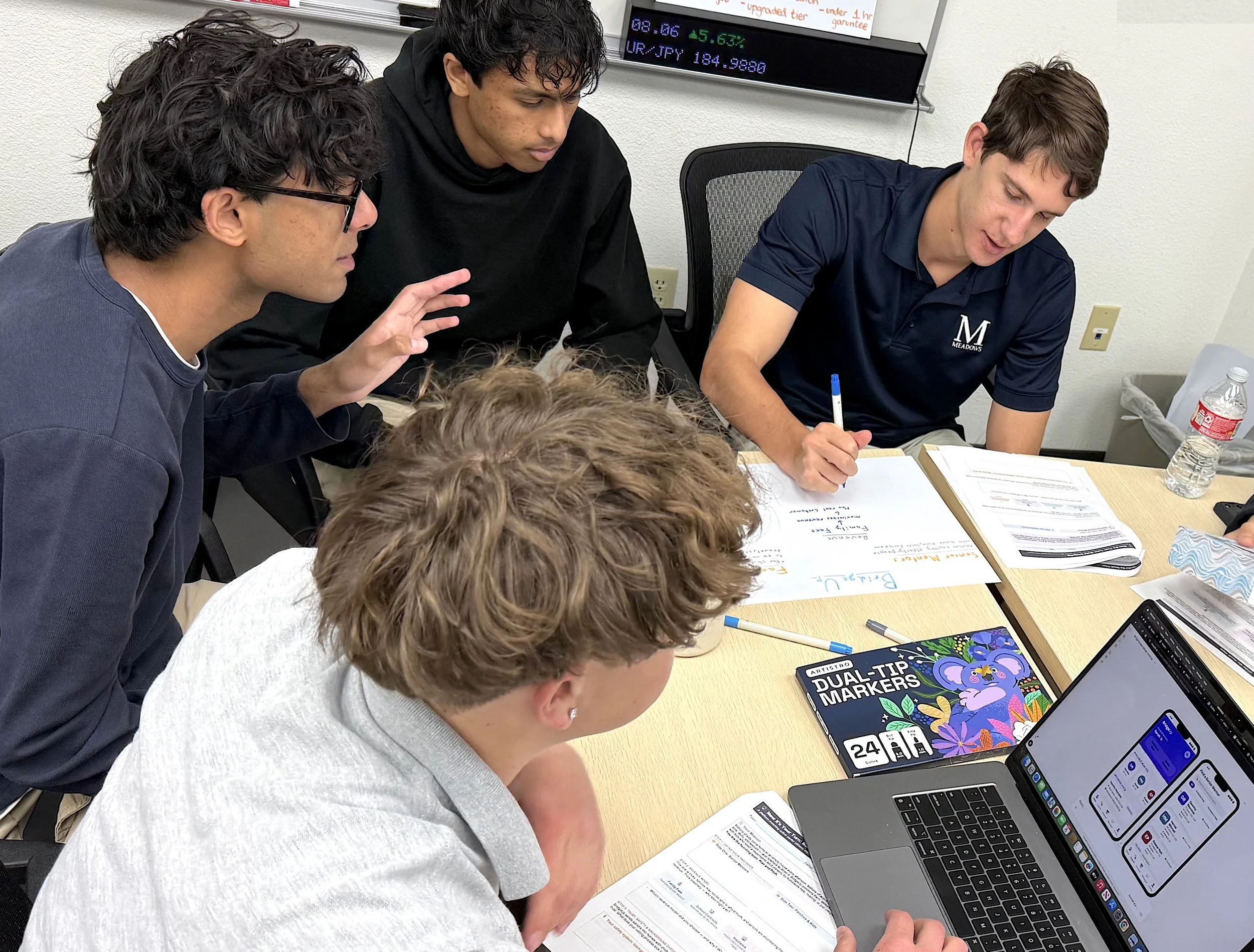
School’s out, but DECA advisors are already planning for next season. Prepare now for the challenge regarding ICDC absences. To colleagues, these feel egregious, as competitors spend only 15 minutes before judges while the rest is seen as “fun.” The frustration is real, but DECA conference engagement is about so much more than just competition. Here are the evergreen skills students are actually building.