Making History, Not Just “Repeating” It
What if history were taught not as a series of static facts imbuing its learners with “knowledge,” but as a collection of information and interconnections which can be reshuffled and replayed to provide insights and inform strategies relevant to today’s world?
I’ve just begun binge-watching Timeless and the series not only has me mesmerized with the concept of alternative history, but it has me scouring online to learn what events actually transpired – something I never did in grammar school history classes. (I realize the web didn’t exist at that time, but suffice it to say I wasn’t looking up historical themes in my World Book Encyclopedia just for fun.) Who would have died if the Hindenburg erupted into flames a day later, on its next scheduled trip? Was Lincoln’s son really saved from death on a New Jersey train platform by the brother of the president’s assassin? How would the balance of world powers have shifted if Von Braun had never been brought to America to head the race to space?
History is dull. Or so I thought during middle and high school. Memorizing the endless names and dates and maps felt like prepping for a round of Jeopardy. Our dedicated and dapper teacher Mr. Babel reminded us often that, “Those who don’t learn history are doomed to repeat it.” My classmates dutifully attended to his lectures and readings and authentic documents, but I struggled to care much about these dead ancestors inhabiting places I’d never visited. I couldn’t envision how this information could impact my daily life – how to make it actionable. Until now.
Today, there are few disciplines more relevant or necessary to safeguarding our way of life than history. From resurging nationalism and attacks on the free press to civil rights struggles and regulatory rollbacks, our nation has lived these moments previously. And yet America seems gripped by an Alzheimer’s of sorts, as though we’re encountering these themes for the first time, and the hard-learned facts of history have faded away. We’re only doomed to repeat history if we don’t know history and if we can’t think objectively about how to fashion different, more desirable, outcomes.
So how can we craft critical educational experiences allowing students to replay history without just acting it out, mindlessly regurgitating and “repeating it”? Providing students tools with which they learn the actual events of history, and then manipulate those events to examine how consequences may have turned out differently, may be a good start. You’ll recognize this idea if you’ve ever seen the Man in the High Castle (yet another alternative history TV series): the episodes reimagine a post-WWII America in which Japan and Germany emerged the victors. It’s a rather jarring concept, and one which snaps students to attention as they debate how the altered timeline would overtly and dramatically affect their lives – in mostly undesirable ways. Ultimately, though, a TV series can only take students where the producers want to take them.
What if history were taught not as a series of static facts imbuing its learners with “knowledge,” but as a collection of information and interconnections which can be reshuffled and replayed to provide insights and inform strategies relevant to today’s world? Experiencing the messiness of leading nations, negotiating policy, commanding troops, and managing resources is the true goal of social science education – one which role play gamification (RPG) can bring to fruition. Multiplayer RPGs such as Making History (Factus Games) invite students to engage in those messy tasks, with the opportunity not just to replay history as it occurred, but to take part in a “do-over” by making different decisions which lead to alternative (hopefully better) outcomes. What’s more, students enjoy learning through gamification as they move from passively consuming history to actively producing a new history given the same participants and settings (Watson, Mong, & Harris, 2011).
Ultimately, getting students to invest in civil discourse and politics today must start with scaffolding their understanding via the historical events which are boomeranging back around. But getting them to apply that knowledge to make it living and actionable – and using it intelligently to inform governance – requires something more than the dry methods of instructing history we endured three decades ago. It’s time to employ technology and critical thinking to transform history instruction with same vigor we’re employing in teaching STEM. Our democracy depends on it.

Making History RPG, Factus Games
Watson, W. R., Mong, C. J., & Harris, C. A. (2011). A case study of the in-class use of a video game for teaching high school history. Computers & Education,56(2), 466-474. doi:10.1016/j.compedu.2010.09.007
Kids, not Widgets
What emerged from the Cold War -- an automated, industrialized, top-down approach to teaching and learning -- is opposite the inventive, progressive environments we embrace in all other facts of life from business to entertainment. You can't create new ideas if you're constantly herded back to the beaten path.
The American education system is due for a refresh. We've all seen the photographs of "then" and "now," showing students sitting in the same configuration of desks as their parents and grandparents, subjected to the same unevolved school experience that's been served up for decades. What emerged from the Cold War -- an automated, industrialized, top-down approach to teaching and learning -- is opposite the inventive, progressive environments we embrace in all other facets of life from business to entertainment.
The go-betweens of teachers in brick-and-mortar buildings separate our students, the very people we're responsible for "training up," from the world for which we're purportedly training them. Not every teacher instructing writing is a published author. Not every teacher instructing science has conducted experimental research. Not every teacher instructing drama has performed on Broadway. That awful adage, "Those who can do, those who can't teach," exists because the experts who are doing-the-do are infrequently the people coaching our kids. How have we come to think of teaching as its own profession, as opposed to all professions inherently possessing a teaching component... and a teaching responsibility? As one of my students (Jason) pointed out today, "Why are there degrees in entrepreneurship? That makes no sense." He's right. It's instructionally equivalent to a culinary program teaching the name and function of every pan, spice, and knife, but never mentoring novice chefs in the smelly, difficult process of skinning and de-boning the fish after they've reeled it in from the ocean. There's no "cheffing" without fishing and gardening. No "entrepreneuring" without depth and experience in technology, engineering, finance, data analysis, and other underlying meaty content that sparks the creation of a new product or process around which an entrepreneurial venture can be constructed. No "teaching" without actual subject matter knowledge and in-the-field experience working as a practitioner in the dirty work. If you're training to be a French teacher, what's more important in your preparation: spending a semester in France, Haiti, or Quebec, or spending a semester in a methods course where you learn to craft bulletin boards featuring photos of Paris?
As for the curriculum itself, the never-ending list of standards we're supposed to make sure kids master ensures graduates emerge uniform, thinking in lockstep, and cookie-cutter in their sameness. Yes, there are basics kids must learn -- fundamentals that are requisite to learning anything in future years. Of course children still need instruction in reading, writing, and computing (i.e., "doing math"). And gaining fluency in the basics offloads learners' brains, reducing cognitive load and freeing them up for more advanced thinking. But marching every child through the same Factory of Fact Acquisition for 18 (or 22, or 26!) years does not produce the worldliness, the innovation, the judgement, or the compassion necessary to confront the increasing pace of challenges peppering us in our connected world. Immersion in Humanities is vital, but consider which is more important: knowing the names of Hell's residents in the Inferno, or analogizing their sins and crimes (and fates!) to today's politicians and irresponsible (Enron) businessmen? When it comes to mathematics, why force Calculus on everyone, when Statistics has greater reach and applicability in our daily lives (think polling, decision-making, medical treatments, purchases, insurance....)?
When I graduated from the University of Texas with a math degree, I didn't realize I would use my education to become an anti-education educator, but that's what happened. Teachers, schools, parents, and most importantly young people must fight back against the over-regulated institutionalization of the American public school system -- or risk losing our place on the world stage. You can't create new ideas if you're constantly herded back to the beaten path. In the 1970s, MIT's Seymour Papert envisioned learning experiences in which children use tools of the real world (including computers) to construct their own learning, free from overly scripted curricula that characterize most classrooms. “Do away with the idea that there should be uniformity of all schools and of what people learn." (Papert) Unfortunately, as fellow tech educator Gary Stager notes (in Paulo Blikstein's reflections on Papert's legacy), when it comes to teachers and teacher trainers, we "ignore [Papert] entirely... as manifest by his absence from teacher education texts, educational technology publications and school reform literature." We can no longer afford to ignore Papert's ideas, but more importantly, we teachers can no longer afford to ignore the individuality of our students, the very people to whom we've chosen to dedicate our professional (and sometimes personal) lives? What does it take to transform American education… and are we prepared to do it?
Most Likely to Succeed
Education. We all got one. What does it mean now to be educated, how do we structure school, and what makes the next generation, Most Likely to Succeed?
Posts
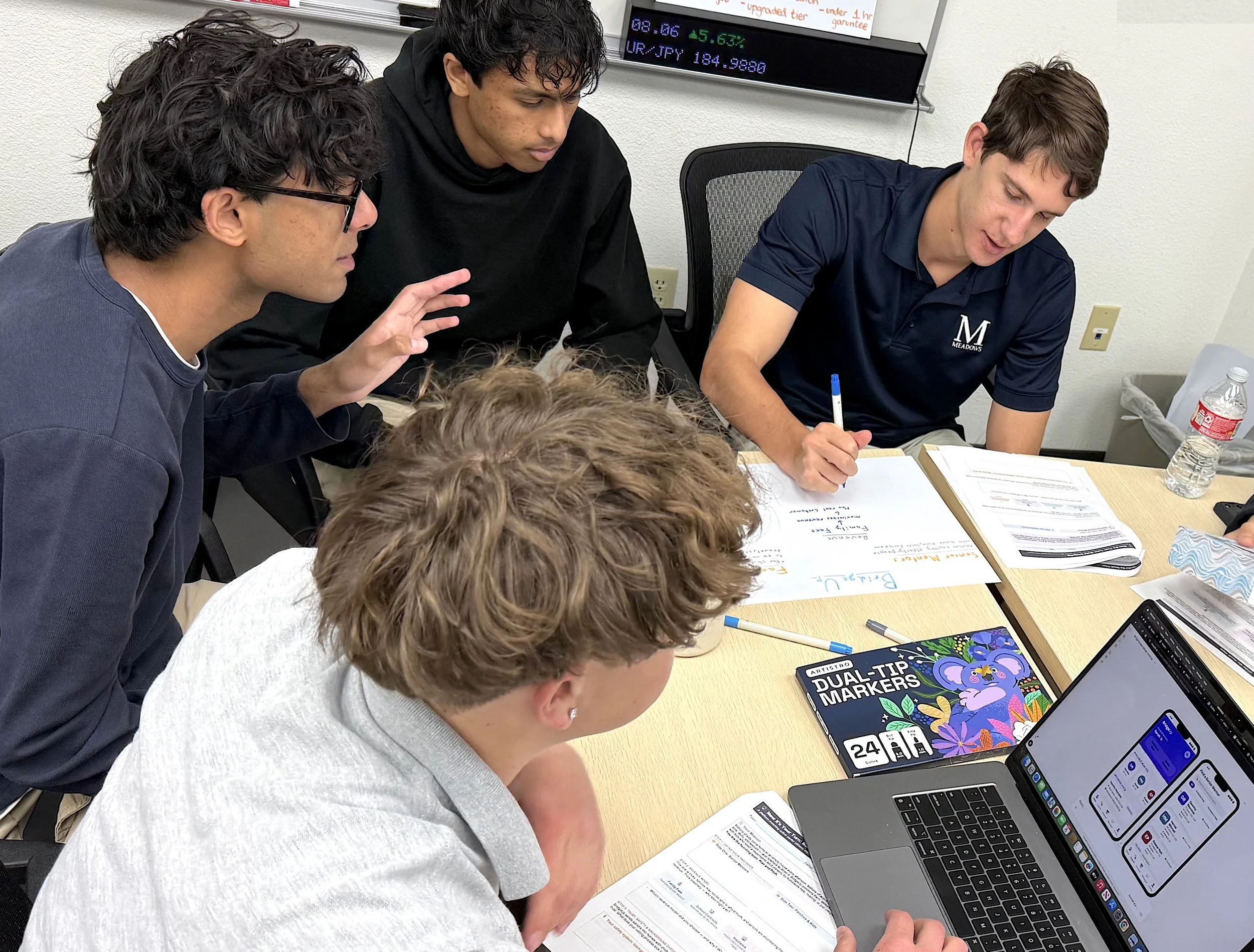
School’s out, but DECA advisors are already planning for next season. Prepare now for the challenge regarding ICDC absences. To colleagues, these feel egregious, as competitors spend only 15 minutes before judges while the rest is seen as “fun.” The frustration is real, but DECA conference engagement is about so much more than just competition. Here are the evergreen skills students are actually building.